“They fancied that everyone should think and talk the same free-thinkin’ way they do with no regard to station, custom, propriety. And that is why they will win. Because they believe everyone should live and think just like them. And we shall lose because we don’t care one way or another how they live. We just worry about ourselves.”
It’s quite a shame that Ang Lee couldn’t quite stick the landing in Ride with the Devil. From a technical perspective it’s basically flawless, boasting a historically authentic production design—costumes, horses, antique firearms and tools, the whole nine yards—an ensemble cast that includes hundreds of Civil War reenactors and numerous professionals, gory action sequences orchestrated to perfection, gorgeous cinematography (Frederick Elmes) and beautiful music (Mychael Danna).
However, despite an initially compelling premise and a mostly stellar cast, Lee’s working with a script that drifts off into no man’s land and a lead actor who’s not quite suited to the material. And this causes the viewer to gradually disengage the longer it flounders, even if they were invested in the early going. So although it’s stunningly realized in many respects, engages the intellect with some knotty moral conundrums, and the senses with Cormac McCarthy-esque depictions of the natural brutality of man, its flaws sadly drag it down.
That’s not to say it’s not good. Far from it. Certainly don’t skip it on my account! Even accepting my frustrations, it’s still a solid piece of filmmaking. Particularly the combat sequences. I only air my grievances up front because they were at the forefront of my mind when the film ended. For most of the first two acts I was convinced I was watching a masterpiece of period drama—a rare feat, indeed. Who knows, maybe a repeat viewing will change my mind.
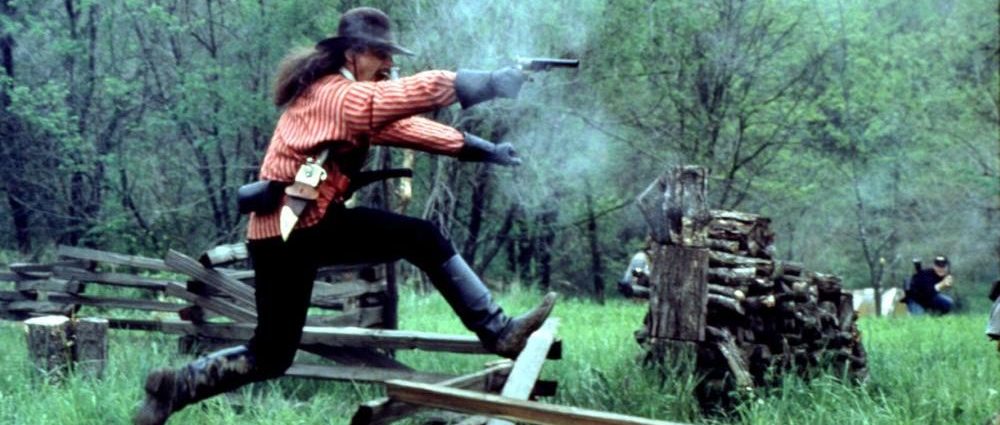
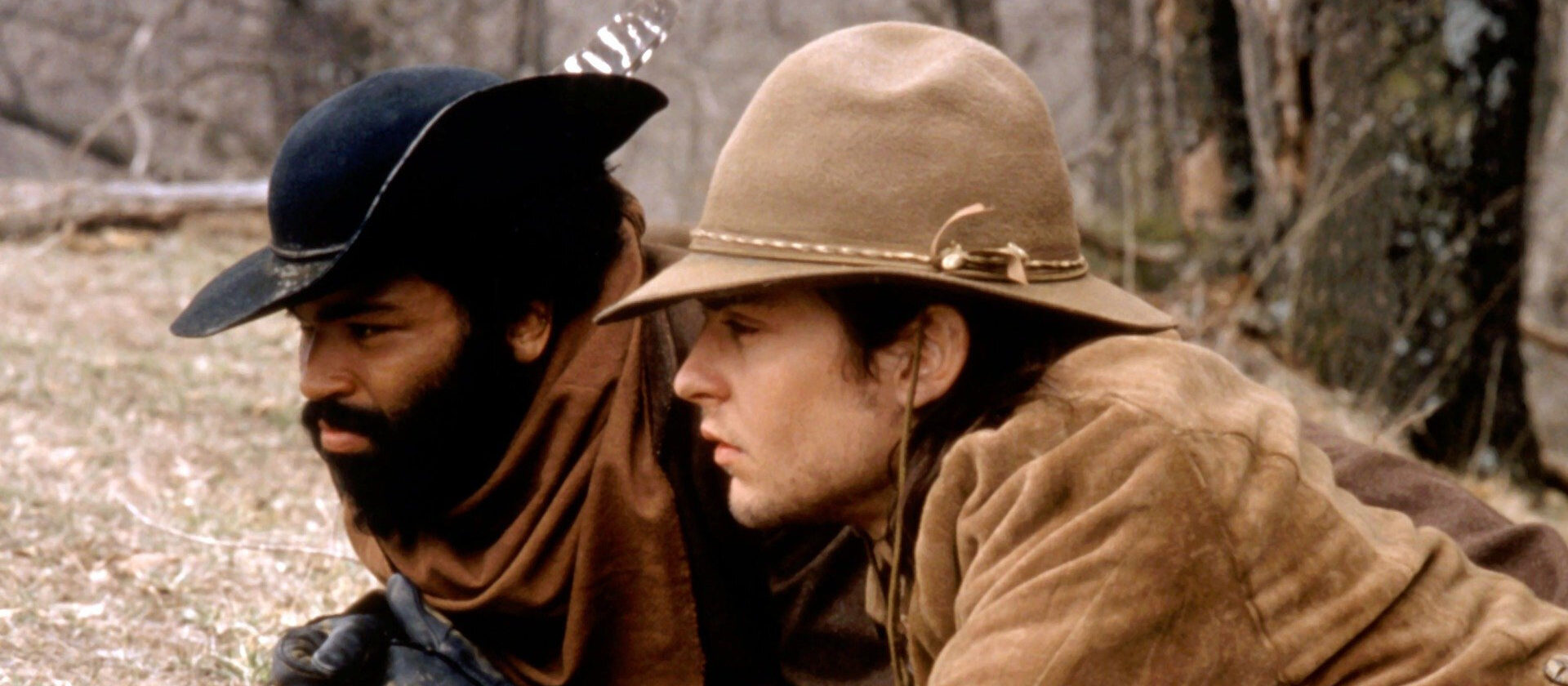
A little context is required to understand the conflict that unfolds in Ride with the Devil. It’s set during the Civil War, and that large scale conflict informs the politics of the situation to some degree. But more specifically, it concerns the exploits of several young men who join up with the Bushwhackers—a rag-tag group of pro-Confederacy guerilla forces who attempt to disrupt the activities of the pro-Union Jayhawkers. Our main cast belongs to this band of ruffians who go around Kansas and Missouri, far from the central military conflict, slaughtering men and burning villages with impunity, ostensibly to protect their “right” to own other human beings. However, once the layers are peeled back, we realize that the issue of slavery is the main driving force for very few of these militiamen. Indeed, our primary protagonist, Jakob Roedel (Tobey Maguire), is a German immigrant who’s never owned a slave and is often treated like a second-class citizen due to his father’s poverty. He and his childhood friend Jack Bull Chiles (Skeet Ulrich) fall in with the militia when Yankees burn down the Chiles estate and murder Jack Bull’s father (David Darlow) on the day of his sister’s wedding. George Clyde (Simon Baker) fights to preserve the Southern way of life, but he is shadowed by Holt (Jeffrey Wright), a former slave whose freedom Clyde bought. And Holt, the film’s most interesting and best-acted character, heads into battle alongside the man who freed him out of a sense of obligation. These four are prominent, but they cross paths and occasionally work with several others who also fight for ulterior motives: particularly Black John Ambrose (Jim Caviezel), a brutal man driven by anger, and Pitt Mackerson (Jonathan Rhys Meyers), a sadist looking to satiate his bloodlust. These two seek out and revel in the carnage, sparing no one when given the choice.
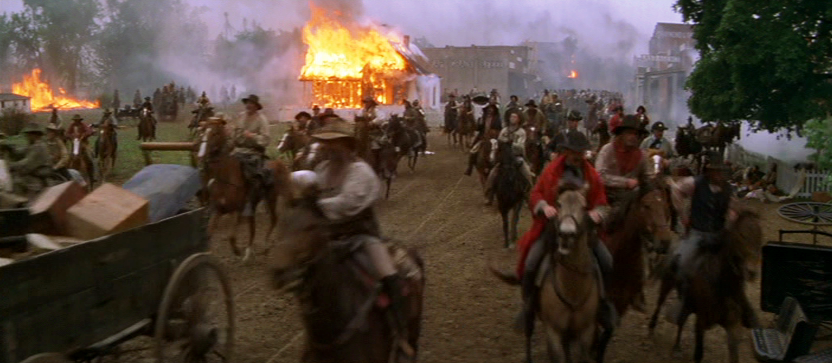
After a few impeccably staged scenes—a homestead wedding, a shootout at an open air saloon, houses on fire, combat on horseback—the story settles down as the fighting pauses for the winter. The four Bushwhackers hole up in a crudely-built dugout shelter hidden on the property of a pro-Confederacy family. A young widow who had married into the family, Sue Lee Shelley (Jewel Kilcher), quickly finds herself taken with Jack Bull when she discreetly delivers food to the men. Clyde spends most of his free time offscreen visiting a girl he fancies. This gives Roedel an opportunity to bond with Holt. Roedel had previously relished the opportunity to express social superiority over the freedman. And Holt for his part mostly kept his mouth shut, letting his reserved manners provide commentary but still performing many functions that he would if he were still enslaved. But they soon form a bond over their shared outsider status. Though little is spoken outright, you get the sense that these two have grown weary of fighting for a confusing cause they don’t necessarily support. Further, it gradually dawns on them that their fight is entirely pointless because the South is going to lose the war. They can kill all the Yankees they want, but to what end? After their initial revenge, none of the men they encounter are responsible for the deaths of their loved ones. What are the moral ramifications of continuing to fight? What’s the point when their brothers in arms are brutal savages who will gamble with the freshly claimed scalps of black men and Dutch men without blinking an eye? Is this a way of life worth sacrificing one’s life to preserve?
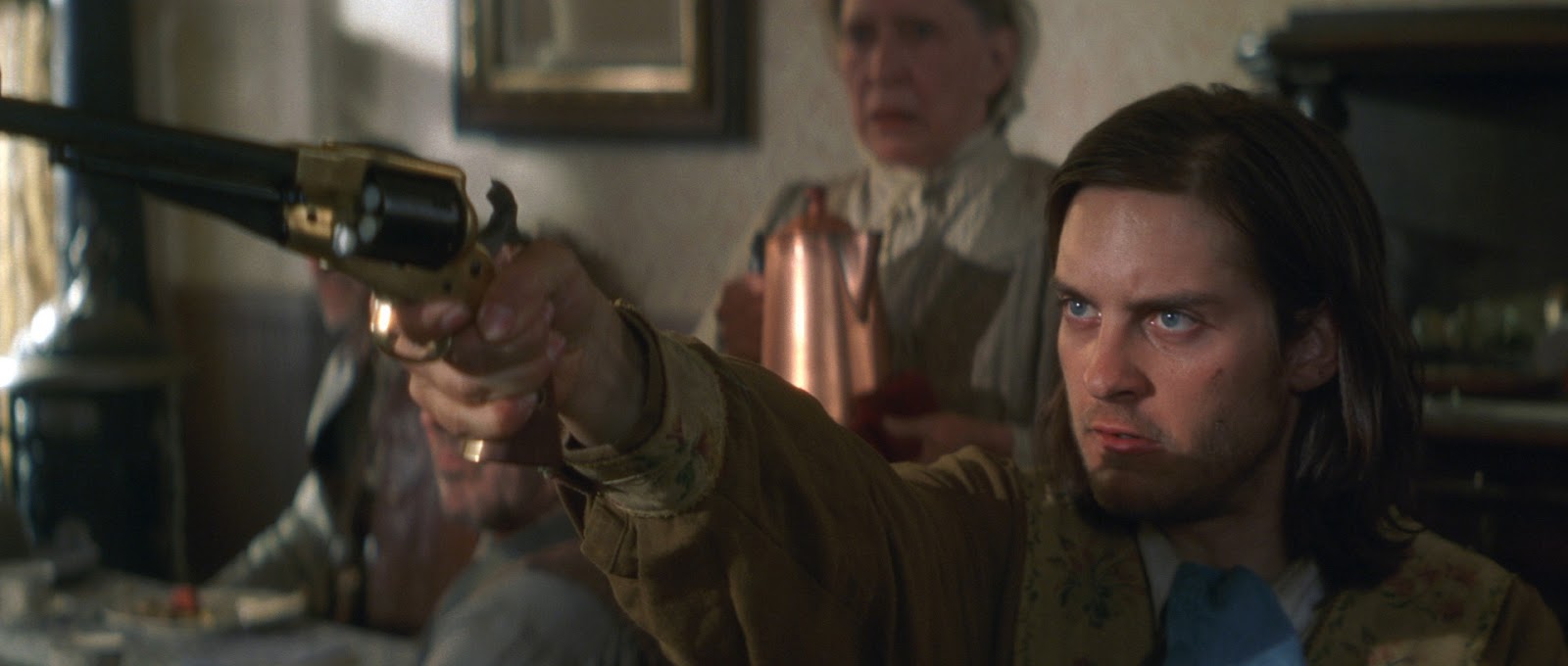
There’s a scene that occurs shortly after the boys join the Bushwhackers in which Roedel, one of the few literate men in the bunch, reads intercepted mail sent from mothers and lovers to the men on the frontlines. He tells them there’s nothing of value to their military aims in the entire bunch, but they ask him to read it anyway. It shows us that the majority of these men are not bloodthirsty evildoers, but humans caught up in a conflict that they don’t really understand. Later, when it’s just the two of them, Holt asks Roedel to read another one. This one is written from a young man to his older brother, telling him that he’s reluctantly joining the war effort. “It could come to where maybe you could learn to like that man,” Holt says. This lack of comprehension, forgivable or not, comes into sharp focus when Jake is shorn of his “Bushwhacker locks” and clean shaven. A stray remark posits that he looks like a young boy. “Just now nineteen,” he replies. At the age of nineteen, he’s killed fifteen men but never known a woman.
Lee would have been golden had he stuck to ruminating on these murky themes and blurry sympathies. However, the screenplay from James Schamus (based on a novel by Daniel Woodrell) uses a clever melodramatic twist to spark a romance between Roedel and Sue Lee. It’s not bad, per se. But it takes up large chunks of screen time, doesn’t really fit thematically, includes some awkward dialogue, and finds Maguire struggling with some emotional moments. I don’t hate it but felt that it detracted from the overall thematic thrust of the film. It should have been given much more or much less attention and is the film’s only glaring flaw.
Lee’s confident direction of large scale action, replete with hundreds of extras, flying shrapnel, gunsmoke, bullet wounds, tossing guns back and forth while riding horses, and so on; Schamus’ illustration of exhausted disillusionment; the provocative arc of Holt, whose steady presence quietly dominates; the understated ideological cogitation that is occasionally interpreted as meandering—all of these elements build up very nicely. If only that romantic arc was in greater harmony with the rest of the picture.