
“Don’t let your mouth get your ass in trouble.”
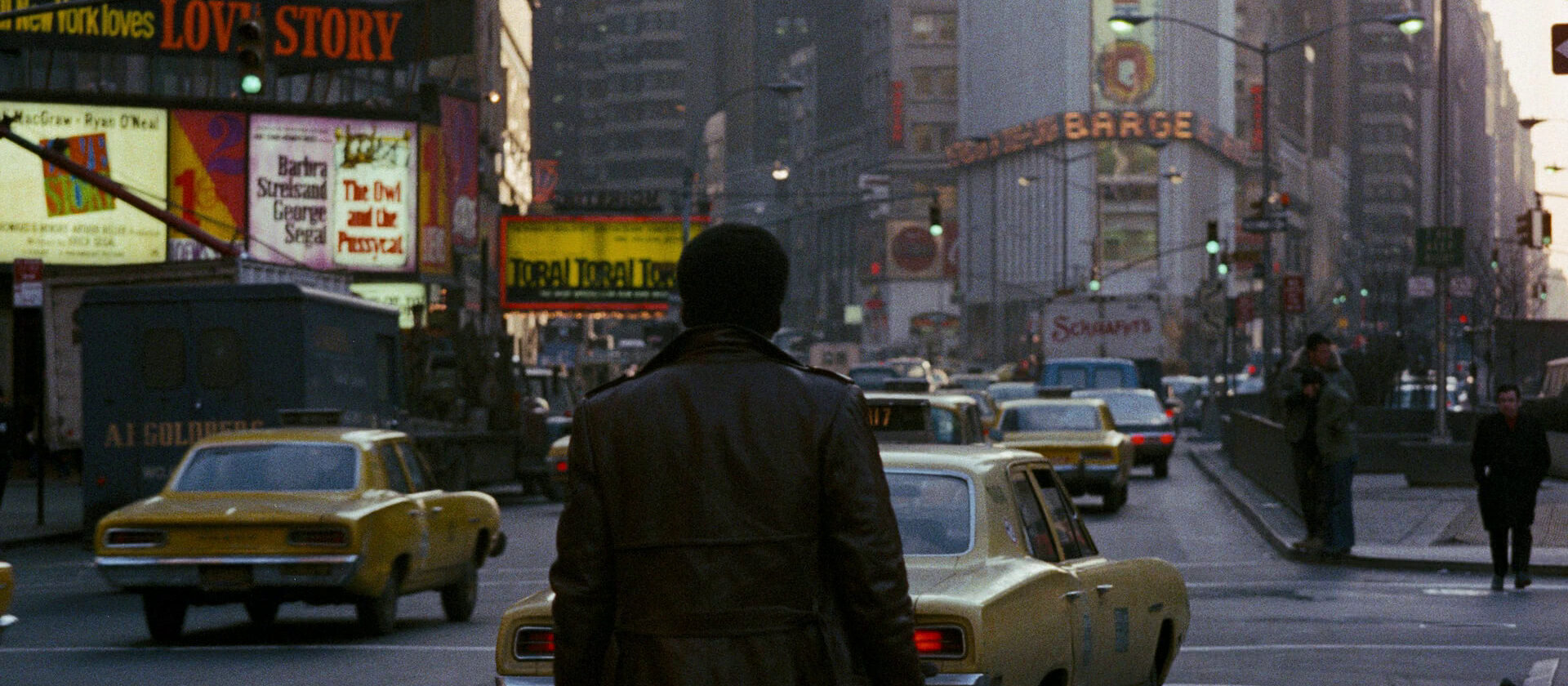
Above all else, Gordon Parks’ Shaft insists on establishing its title character as a bona fide hero. “A black private dick that’s a sex machine to all the chicks,” as Isaac Hayes’ funky opening credits theme song puts it, John Shaft (Richard Roundtree) is a suave player with charm to spare, but he’s also not afraid to get tough when he has to. He’s confident in every context—black or white, legal or criminal, business or pleasure. When he walks into traffic on the streets of Harlem in his leather trench coat, the cars bend around him (if they don’t, they get the finger). When he has his boots polished, the camera looks up at him from the shoe shiner’s lowly vantage, as if he were royalty. When he makes love to a woman, it’s his dark skin that draws the camera’s attention. One gets the impression he’s too cool to fail, an urban-mythic creation of gritty low-budget cinema who prowls the decaying concrete jungle of 1970s NYC, a place teeming with life and yet not a place one wants to live.
This would be overbearing if Shaft hadn’t come out in 1971—it’s considered a seminal blaxploitation film alongside works like Cotton Comes to Harlem, Sweet Sweetback’s Baadasssss Song, and Super Fly—or if it didn’t use this self-made swagger to bolster its rather by-the-numbers noir plot, which is, in the final analysis, not very exploitative. Indeed, it scans as a pure old school Hollywood genre picture updated to convey a black perspective. But a well-made picture, certainly, else this would all just be academic. Further, though, as a consensus canonical film that laid down new ground rules and helped shape a film movement, the attitudes and aesthetics of Shaft can be traced forward not only through the blaxploitation subgenre but also to modern auteur cinema, most notably in films like Quentin Tarantino’s Django Unchained.