“The simple truth is, not all of us become the men we once hoped we might be. But we are all God’s creatures.”
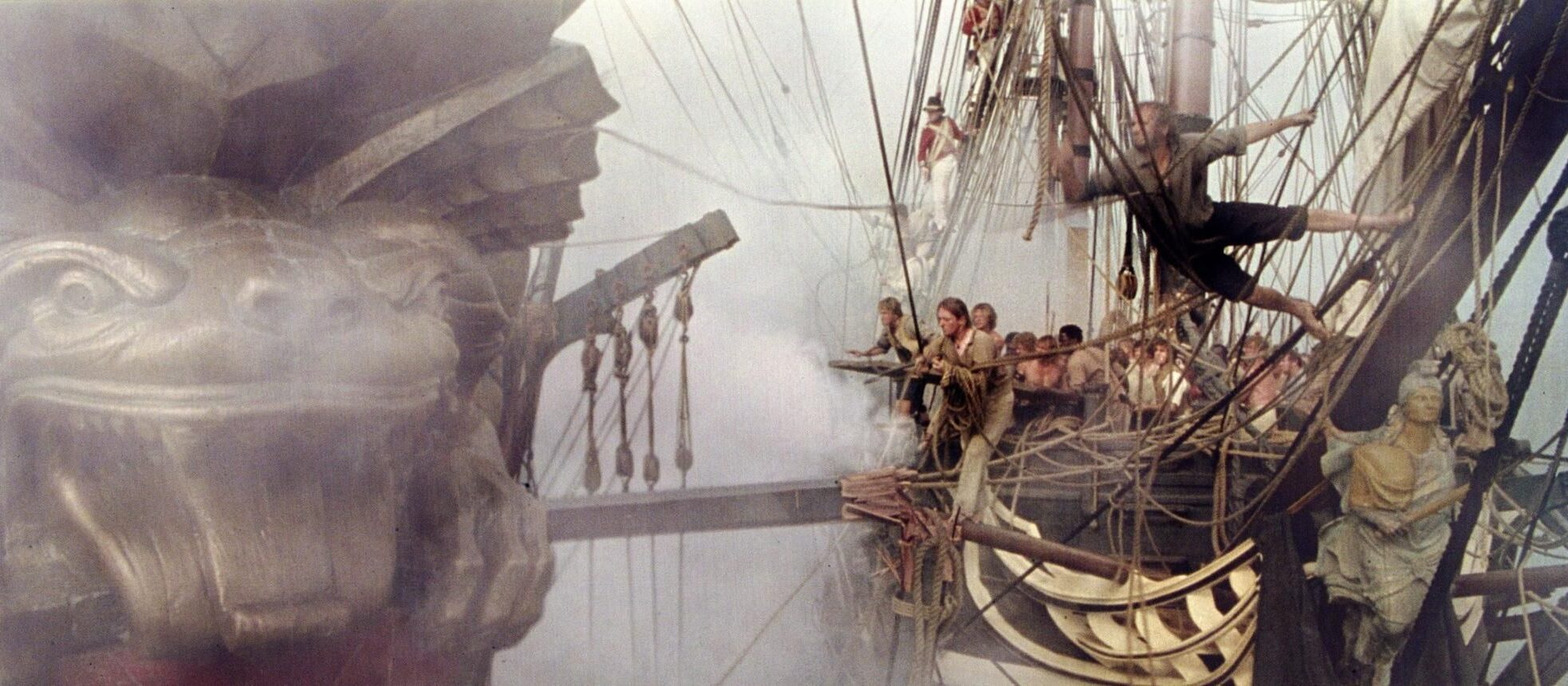
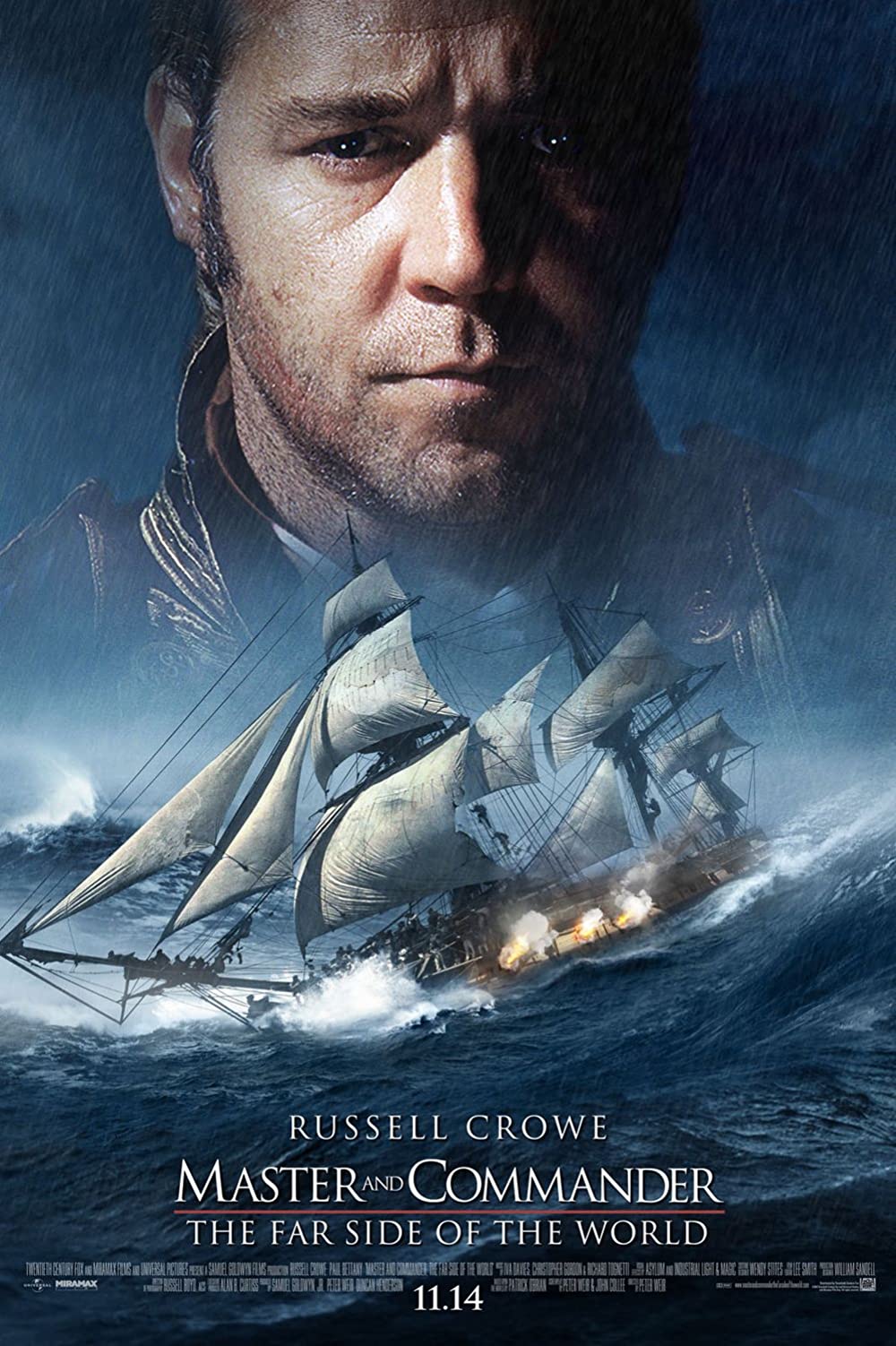
The aim of Peter Weir’s Master and Commander: The Far Side of the World is not to document the pursuit and defeat of the Acheron, but to depict the life aboard the HMS Surprise, the British ship ordered to intercept it. If war is boredom interrupted by brief flashes of savage terror, then the film provides a faithful depiction. Captain Jack Aubrey (Russell Crowe) and his men do engage in a handful of scuffles with the better-equipped and stouter frigate, but the bulk of the film is taken up with the life lived between those chaotic moments—with meals, conversations, aspirations, doubts, jokes, whims, prayers, and music shared among boys and men alike.
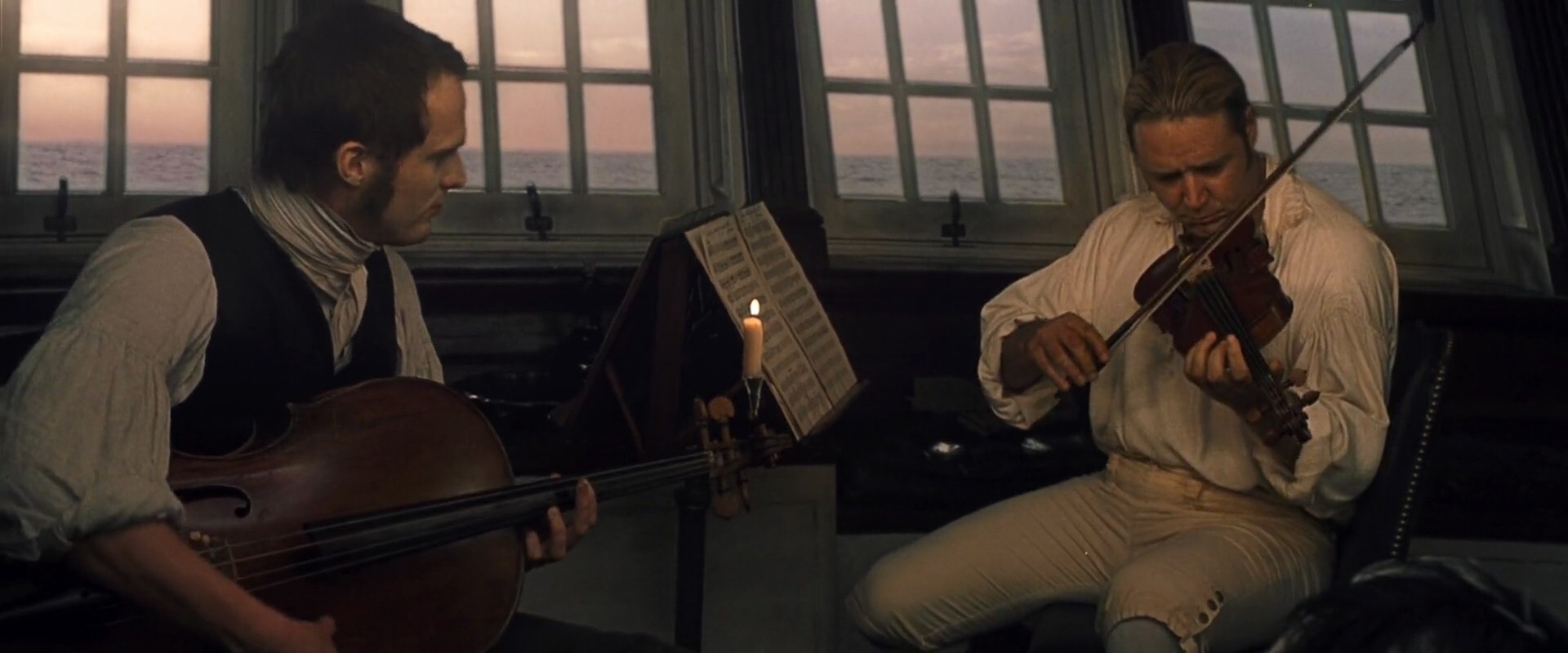
It’s with these senses of tight-knit loyalty and bonhomie that one must view the rest of the film, which is based on a series of novels by author Patrick O’Brian noted for their elegance, rich characterizations, historical authenticity, and entertainment value. Once we see the courage and technical competence of the one-armed, adolescent Midshipman Blakeney (Max Pirkis), we comprehend Aubrey’s decision to temporarily allow the boy to command his ship during a bold military maneuver (a decision that proves crucial to the strategy’s success). After we’ve seen Aubrey trade puns and play violin and have frank private conversations with his longtime friend, the ship’s surgeon Stephen Maturin (Paul Bettany), we understand why the captain would temporarily delay his mission when Maturin is accidentally shot by Captain Howard (Chris Larkin) while hunting an albatross. We also understand why Maturin is immediately forgiving of the accident. On the other hand, when Midshipman Hollom (Lee Ingleby) displays a lack of the qualities needed for a man of his station and finds his subordinates openly disrespecting him for it, we understand that such disharmony cannot go unaddressed by the captain or Hollom himself. That Hollom chooses a coward’s way out only reinforces the notion that these men are brothers, by providing an exception to the rule.
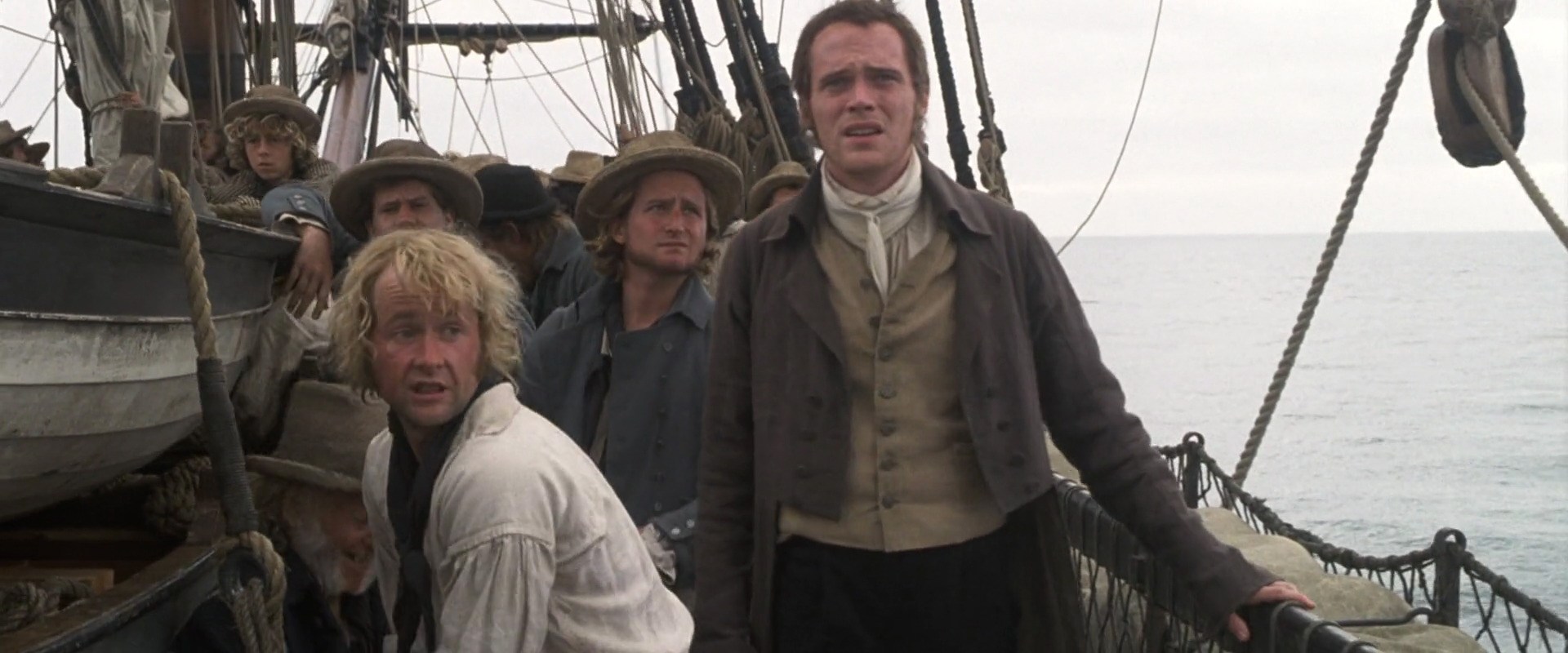
Another element at play is that hand-in-hand with these multigenerational relationships comes an incredible technical competence. The seasoned crew members know all of the tricks of the trade, but the younger men also bring their keen minds to each of their tasks, each man understanding his place in the hierarchy and how to physically maintain the ship. Working in unison, they operate the Surprise with grace and efficiency born of years of repetition. At one point, Aubrey makes the decision to continue pursuing their foe despite heavy damage from a skirmish. Instead of heading for a port and repairing the ship with fresh supplies, the crew repurposes non-essential parts of the ship to refit-at-sea. Soon thereafter they rig up some empty barrels, a sail, and a lantern in order to serve as a decoy when they’re ambushed at night. It’s an epiphany from the young Blakeney—he had observed a camouflaged insect when surveying the Galápagos Islands with Maturin (who is a naturalist at heart but works as a surgeon so he can travel to exotic lands teeming with undiscovered wildlife)—that provides the stratagem for finally defeating the Acheron. While surveying, he asks his mentor if the unique specimens they are observing were changed by God, to which Maturin replies that indeed they were; the question is whether certain species also change themselves.
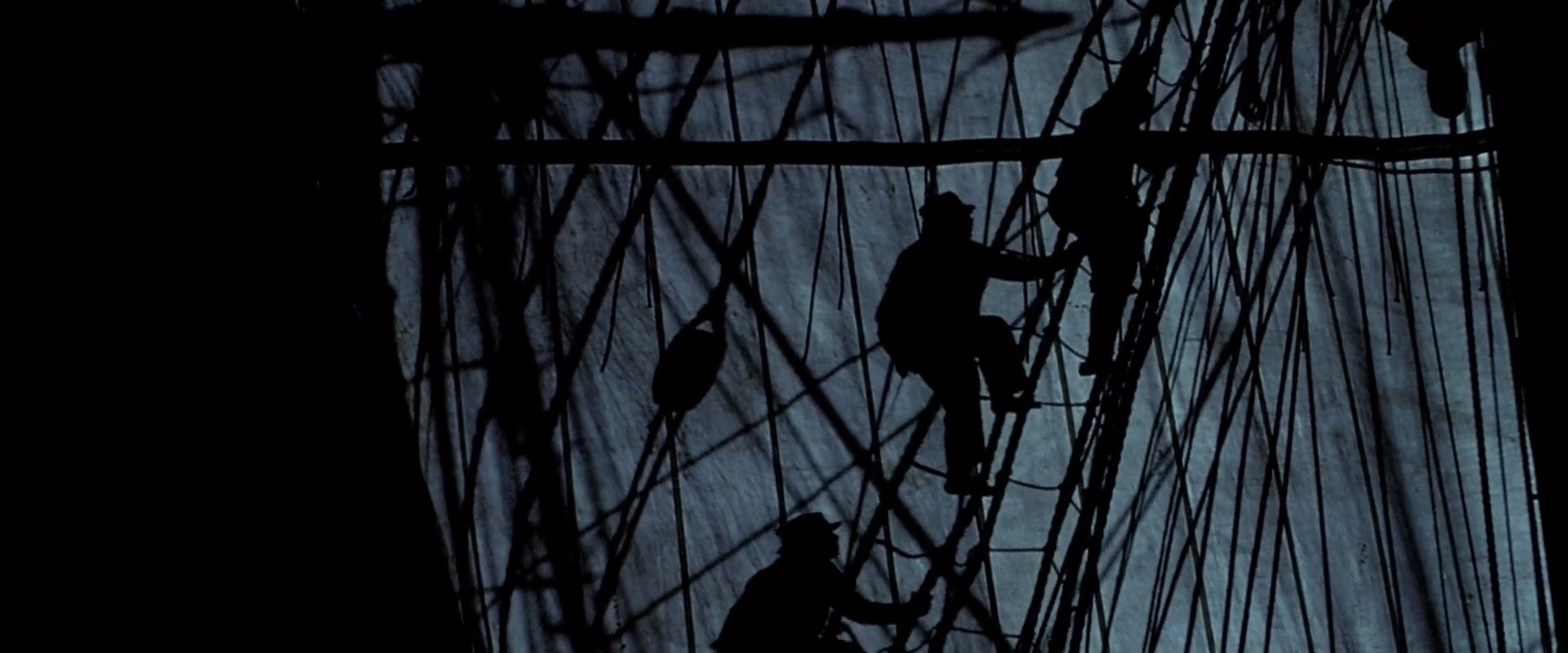
All of this is bolstered by an astounding production mounted by Weir and his collaborators that involves full-scale replica ships, thousands of costumes and props, on-location shoots, and reuse of the gimbal system and twenty-million gallon tank built for Titanic. Crowe and Bettany even learned to play violin and cello, respectively, to give their scenes of music-making an authentic feel. It looks like a million bucks (or should I say a hundred and fifty million bucks) and when the cannonballs start flying, and even when they’re not, actually, the orchestration of sound and image really comes together to create a compelling representation of naval warfare with all its creaks, groans, clangs, splashes, and painterly visuals.
It’s a real shame, and yet totally unsurprising, that Pirates of the Caribbean: The Curse of the Black Pearl, Disney’s anachronistic swashbuckler that released a few months before Master and Commander, made enough money to launch a massive franchise while Weir’s masterful and commanding, historically fidelitous, verisimilitudinous film barely recouped its production budget.