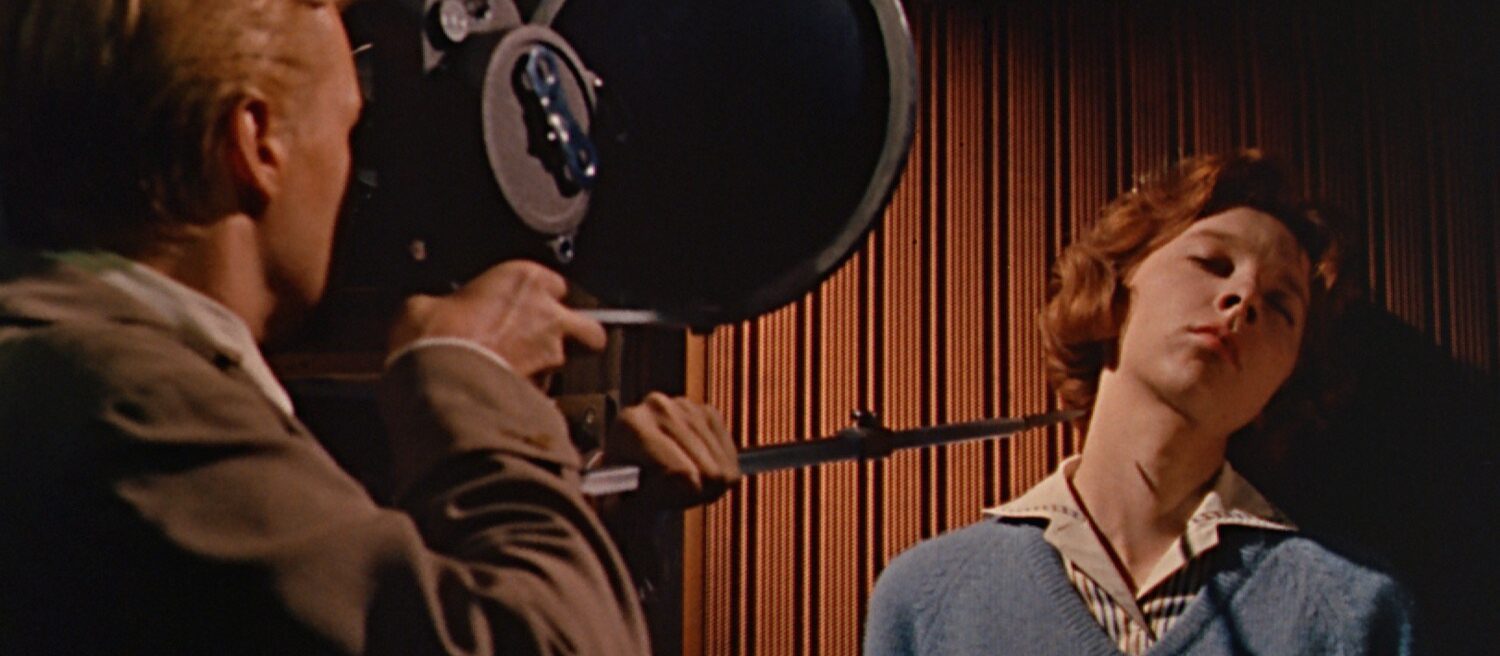
“Well, he won’t be doing the crossword tonight.”
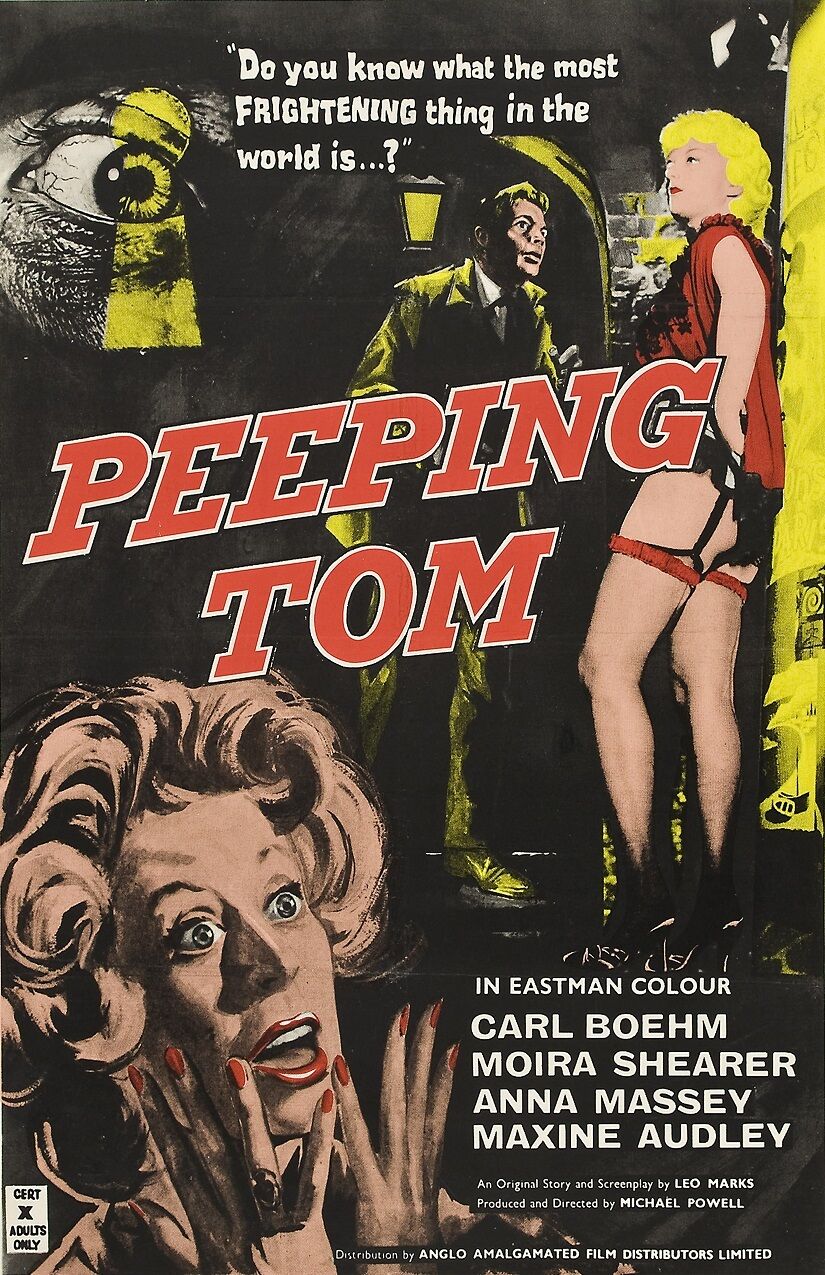
Peeping Tom infamously destroyed Michael Powell’s career before a gradual rehabilitation so complete that it is now seen as a seminal entry in the horror canon and a forerunner of the slasher flick, as well as a perceptive examination of sexual perversion, childhood trauma, and the voyeuristic qualities inherent to filmmaking. The first time I saw it I was a giddy young college student who had taken only a few tentative steps into the vast and beguiling wilderness of cinema—I was astonished by how little contextualization was needed for it to utterly grip me. From Carl Boehm’s chilling performance, to Brian Easdale’s nimble score, to Powell’s bold dissection of the filmmaking process, to Otto Heller’s lavish palette, to Moira Shearer’s wonderfully staged dance routine, to scripter Leo Marks’ gallows humor, this is confident filmmaking—tense, taut, smooth. It’s a work that gets under your skin in an almost nonchalant manner, using sumptuous images and tantalizing sound design to entice you into a disturbing, degraded, depraved world where cheap whores are lured to their deaths by a socially awkward madman.
It’s true that the film’s capacity to shock has diminished over time—watching someone get bloodlessly stabbed in this film is nothing compared to the slashers that came later, let alone modern torture porn films (which more or less prove its thesis)—but it is much more than its depictions of violence, nudity, and prostitution. Though narrow in narrative scope, its implications are broad. This is a simple story of a focus puller who moonlights as a pornographer and, when the occasion presents itself, indulges his fetish of capturing the expressions of raw terror that materialize on women’s faces when they realize they are about to be killed by someone they trusted.
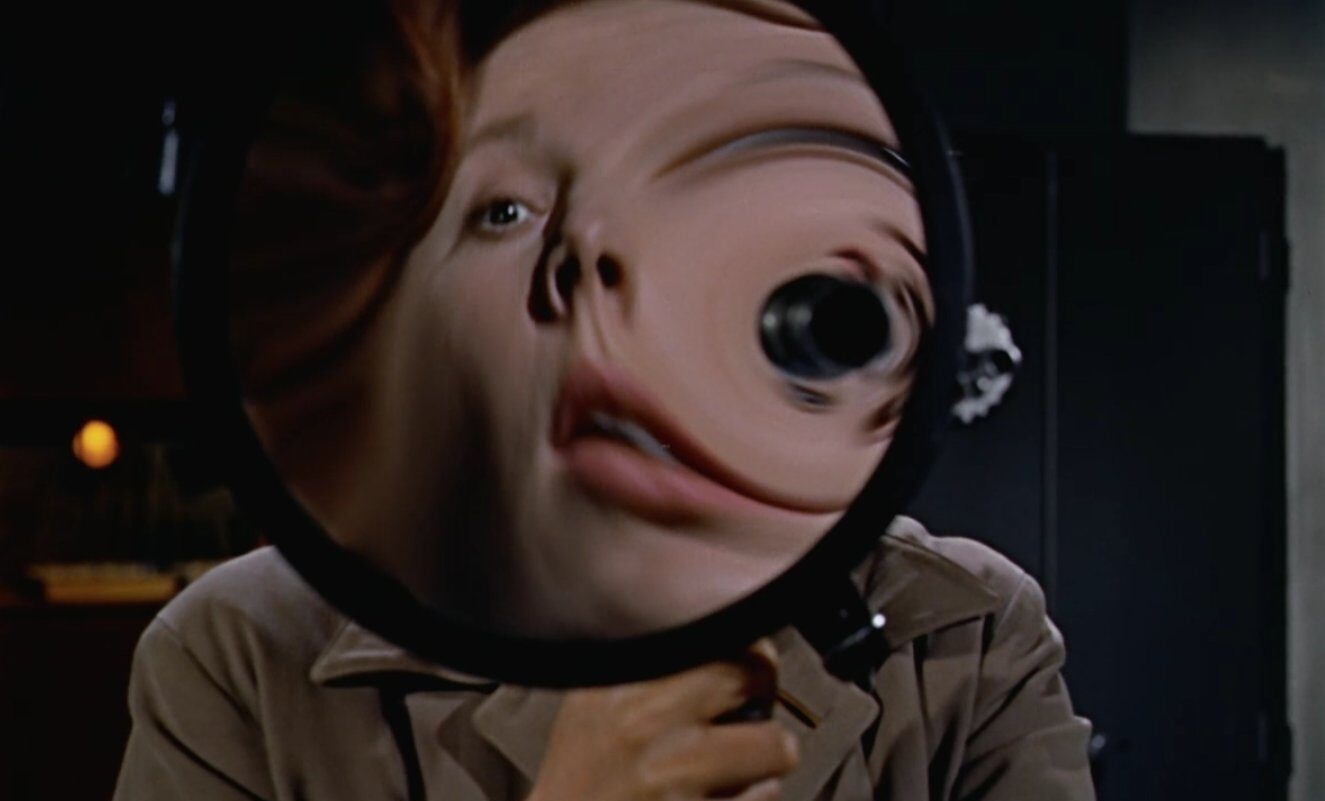
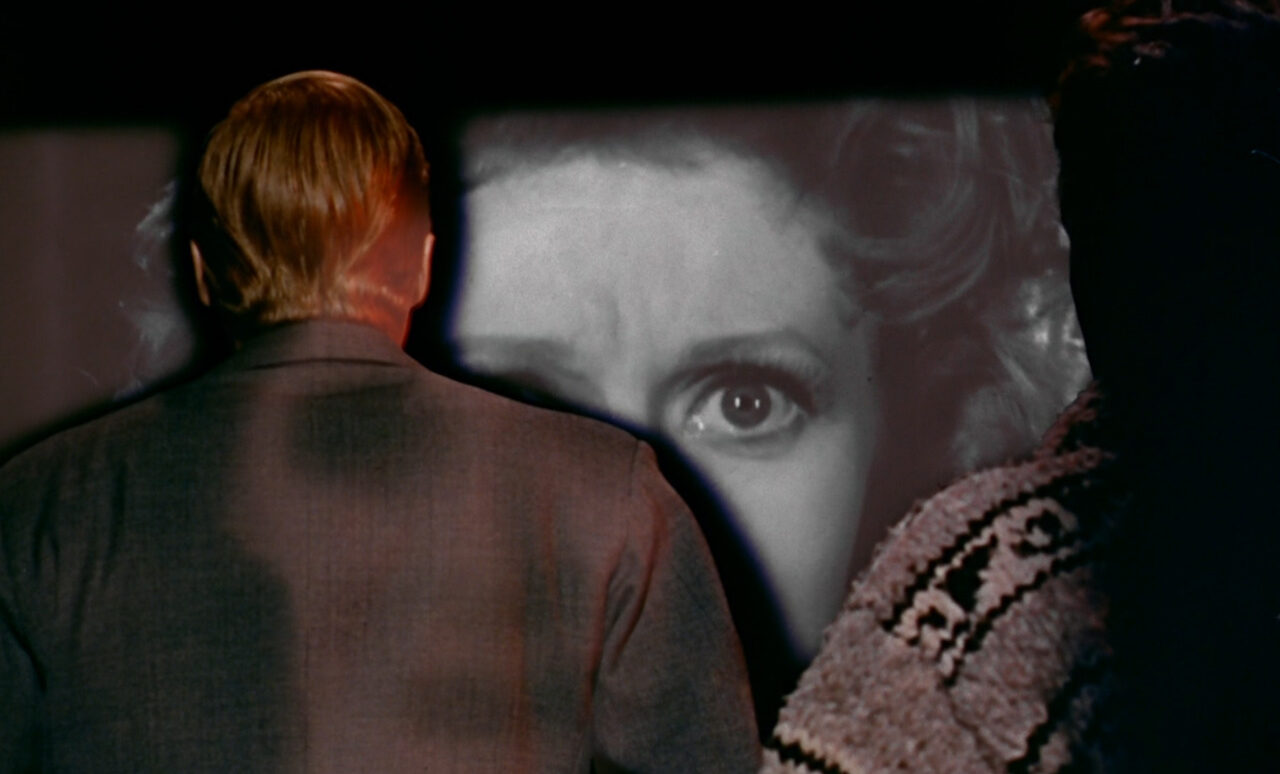
That’s a decidedly simple synopsis upon which a low-brow slasher could be constructed, but Powell and Marks use this to probe the movie watcher’s psyche. To question the cineaste’s desire to see people up on a screen, stuck in the same recorded routines for time immemorial. To even question his own profession by suggesting the camera is an instrument of death used by predatory obsessives, but that those who wish to be in front of the camera are also mentally unwell. It goes further still with its focus on the childhood abuse the killer suffers at the hands of his psychologist father (Powell and his son in a cameo), and his attempt to keep his friendly relationship with his downstairs neighbor (Anna Massey) pure and untainted by his inherited psychosis. The voyeur is clearly a monster, and yet Powell not only asks us to sympathize with him, but to identify with him.
Considered alongside its progeny—which include not only sublime slashers like Halloween, Blow Out, and Suspiria but also less conventional films like David Holzman’s Diary—Peeping Tom demands to be held in high regard for its profound influence alone. Plus, I’m always happy to end up agreeing with Martin Scorsese—indeed, without his astute use of artistic and financial capital to get the film re-released in the late ‘70s, Michael Powell’s masterpiece might still be lost under a pile of rotten tomatoes. Is there any surer sign that the horror genre has historically been misunderstood than a film this good being universally despised upon release, let alone that its director lost all of his credibility?