“Okay, just to be clear here, our options are: die here, die in the tunnels, or die in the streets.”
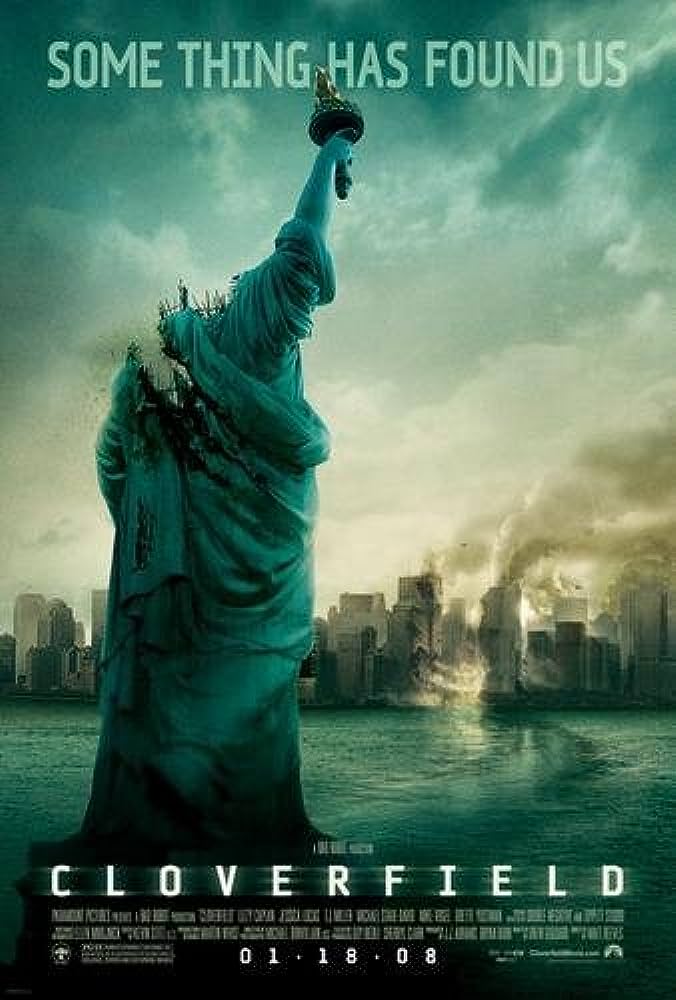
Godzilla meets The Blair Witch Project in Cloverfield, an unconventional horror film that depicts the ravaging of New York City by a giant monster from the perspective of a shaky handheld camera. Early on, director Matt Reeves’ attempts to achieve a sense of realism are mostly successful. The film opens with title cards suggesting the footage was found on a camera retrieved from the site that used to be Central Park. Snippets of the intimate aftermath of Rob (Michael Stahl-David) and Beth’s (Odette Yustman) one-night stand occasionally interrupt the footage that is overwriting it. The camera is passed from Rob’s brother Jason (Mike Vogel) to Hud (T.J. Miller) with instructions to film farewells at a going-away party for big bro, and he drunkenly fumbles around with the camera as he tries to use the cover of his task to flirt with his longtime crush Marlena (Lizzy Caplan).
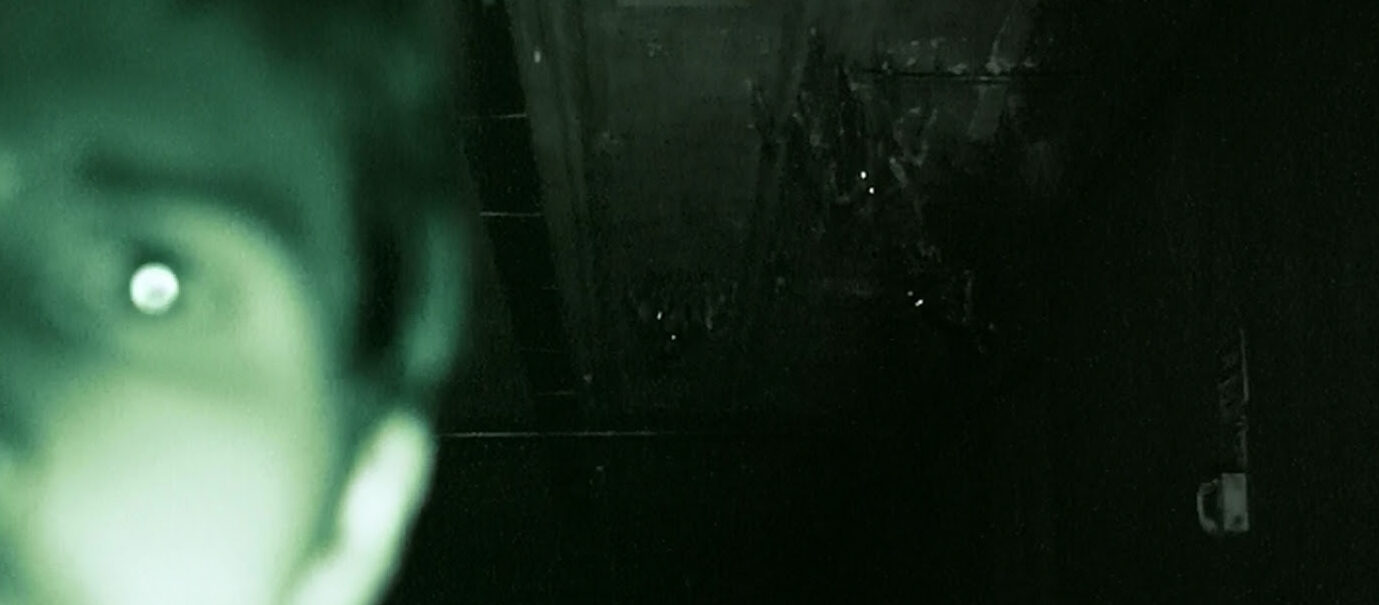
Once things go all topsy-turvy, however, and the towering monster starts dripping little spidery vermin like beads of sweat, they become much less believable. In Blair Witch, it made at least some sense for a group of scared-to-death film students to keep their cameras rolling. Here, though, all we get is the half-plausible explanation that firsthand video evidence of this alien attack is vitally important for posterity, which doesn’t explain why the film frequently plays like an on-rails theme park ride. Indeed, if the opening salvo adequately captures the texture of a neophyte cameraman’s unsteady handle, the bulk of the film feels too much like Children of Men to take its conceit too seriously.
The immersion-breaking effect of this preference for spectacle is compounded by a brazenly contrived story that relies on its personal frame and yet requires its banal characters to make heinously illogical decisions about every ten seconds. All of this would be less glaring if it were more effective as a horror movie, but the staginess and PG-13 restraint dampens the raw power that might have been generated by this genre reflection on Ground Zero.
Still, its peripheral view of the disaster, the ambiguity of events, the range of human reactions to having one’s frame of reference obliterated, the meta-frame of the overwritten video, the curious Dogme95-CGI hybrid aesthetic, and the downbeat ending give it a certain intrigue, especially in an era where real-life disasters and tragedies are more and more frequently captured by amateurs on cell phones (with those filming the ad hoc videos often making heinously illogical decisions, for what it’s worth).