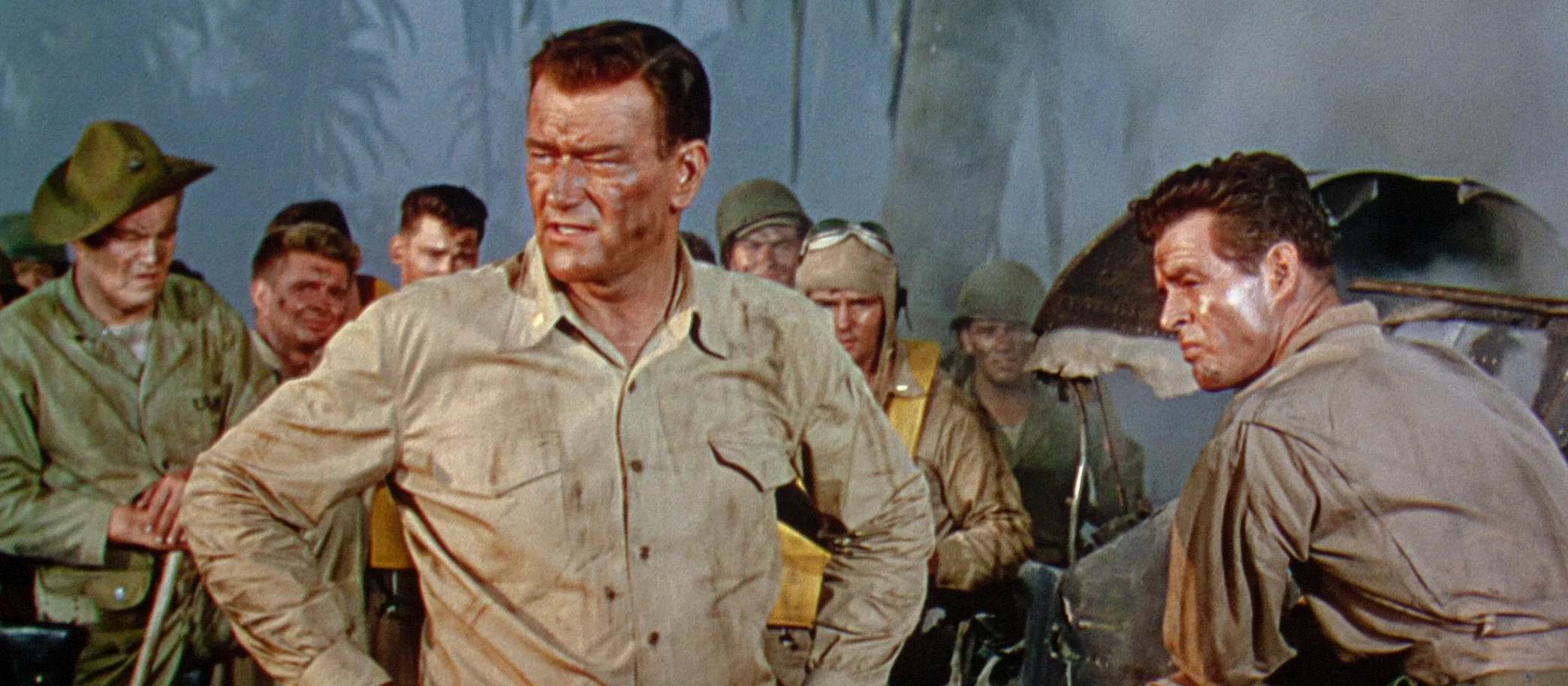

“I only regret I ain’t got but one life to give for my country.”
While not a top-flight war movie and perhaps the least distinguished film Nicholas Ray ever made, Flying Leathernecks is certainly a competent John Wayne vehicle. In a role that will feel familiar to anyone who’s seen Wayne fight in every war that America has ever participated in, The Duke plays a stern commander assigned to a squadron of undisciplined young men who prefer the amiable leadership style of the executive officer (Robert Ryan) that was passed over for promotion into the position. Wayne and Ryan go head to head with one another as often as they do with the Japanese forces that doggedly attack the American base of operations, their disparate approaches underscoring the challenges of military leadership, where young men are often knowingly sacrificed for the greater cause. A few segments flesh out the family support that these soldiers receive from back home, including a charming but ill-fitting period of leave where Wayne returns to the States to find his boy speaking in military jargon and referring to him by his rank—but the film mostly gets by on its esprit de corps (as the film puts it), its emphasis on tactics, and the skilled blending of archival Korean War footage with newly shot Technicolor aerial sequences. The prominence of aircraft is likely due to noted airplane enthusiast Howard Hughes bankrolling the entire production through RKO. Hughes’ oversight is probably also why it feels so anonymous as a Nicholas Ray film, as the director seems to be working more or less as a hired gun.