“Is that some kind of sick joke on God?”
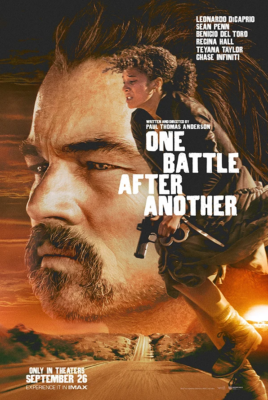
With One Battle After Another, Paul Thomas Anderson masterfully threads the needle on a hyper-political film in this highly contentious era of American politics that manages to furiously punch in all directions, refrain from devolving into soapboxing, and above all, remain eminently entertaining. Though they’re very different films and Anderson’s has garnered a more positive critical reputation, I think it stems from a similar place of angst as Alex Garland’s Civil War (2024).
A comedy-thriller loosely based on Thomas Pynchon’s Vineland (1990), it shifts the book’s action from the time of Reagan’s reelection to that of Trump’s; though I don’t recall the year ever being stated outright. Zoyd Wheeler becomes “Ghetto” Pat Calhoun (Leonardo DiCaprio), an explosives expert wreaking havoc on government agencies as part of militant leftist group the French 75, setting off bombs and fireworks, throwing up middle fingers, shouting “¡Viva la revolución!” and making love to resistance leader Perfidia Beverly Hills (Teyana Taylor) because he loves black chicks.
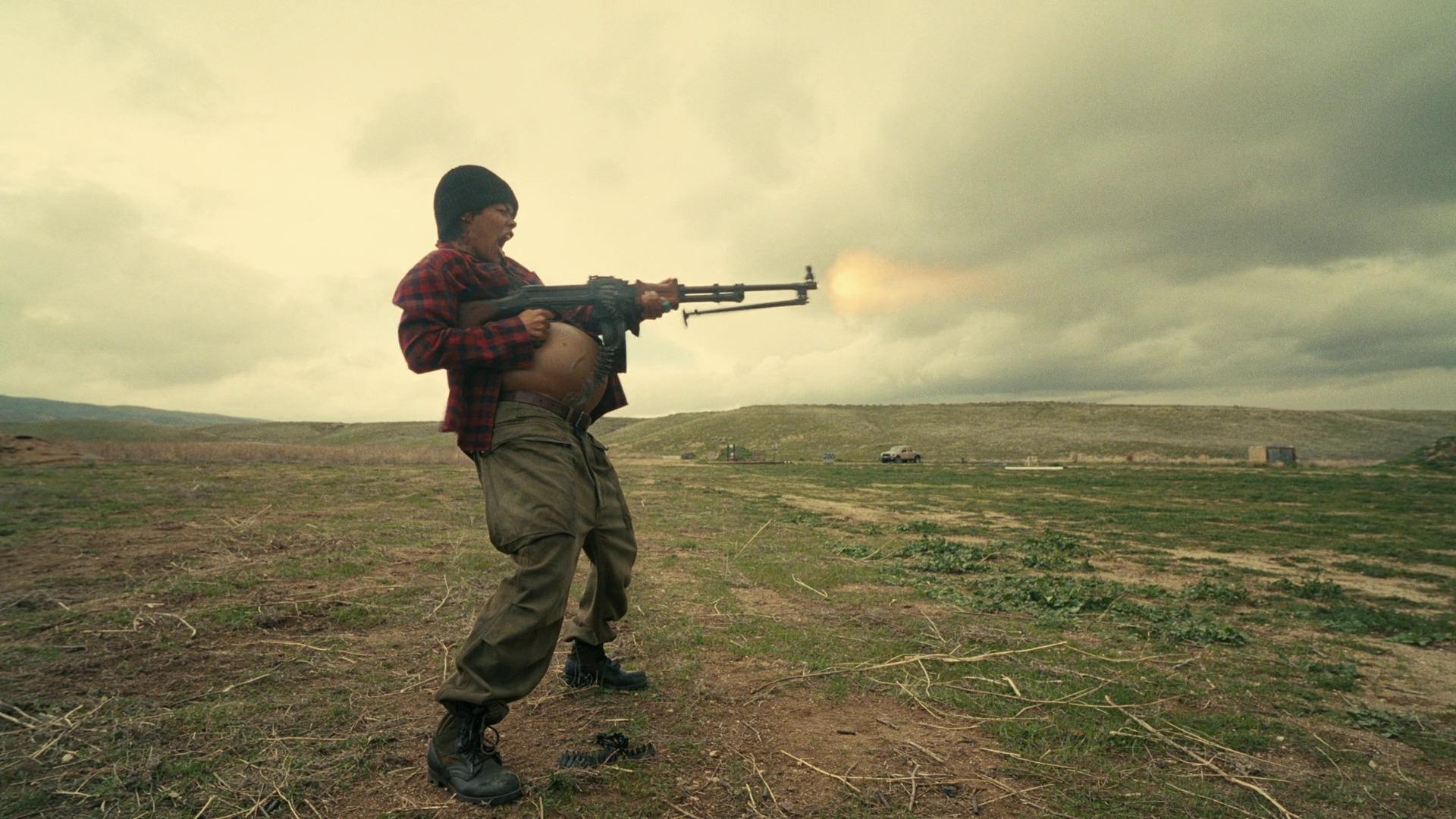
A few snafus break up the happy couple—Perfidia sexually humiliates Colonel Lockjaw (Sean Penn) during an operation at an immigrant detention center; Lockjaw then becomes obsessed with her and blackmail-rapes her when the opportunity arises; she has a baby and then, when Pat’s parental instincts kick in and hers do not, leaves the baby with Pat so she can resume guerrilla action; during a bank robbery, she impulsively kills a security officer, prompting Lockjaw to turn her into a rat in exchange for witness protection.
(Wood Harris—Avon Barksdale in The Wire [2002–2008]—and Alana Haim—breakout star of Anderson’s previous film, Licorice Pizza [2021]—appear early on as another interracial couple likewise drawn together by a fetish; one would guess some flags will be thrown on Anderson for depicting all of his black-white attractions as driven by a racial kink.)
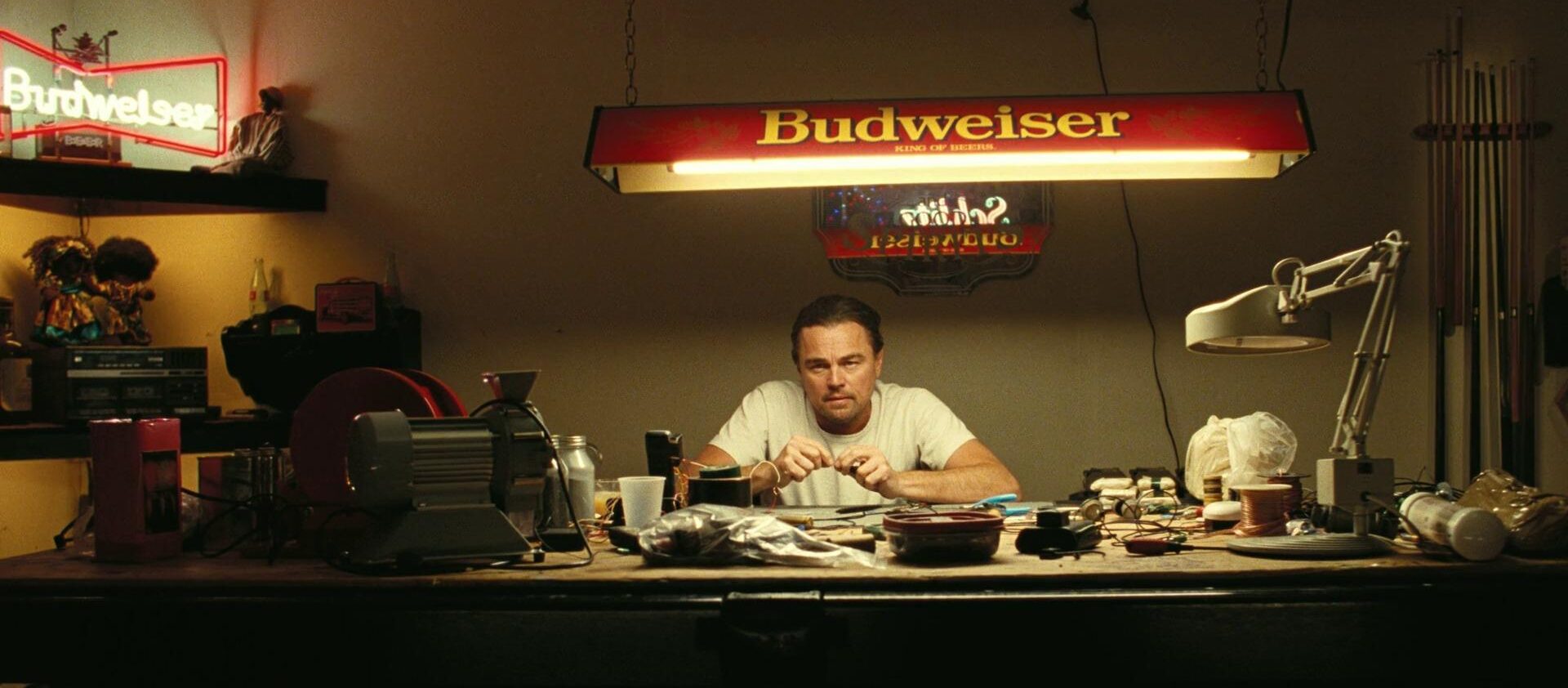
It’s a bit of a mouthful to write out, but completely legible in Anderson’s hands. And but so anyway fast-forward 16 years and Ghetto Pat is now Bob Ferguson, having been relocated by the resistance with his daughter Willa (Chase Infiniti) when Lockjaw started hunting everyone down based on Perfidia’s intel. She wants to be a normal kid, have a cell phone, go to school dances. Instead he interrogates her friends and has made her memorize absurdly lengthy codephrases in case the world ever goes topsy-turvy and she has to make contact with any of her dad’s old revolutionary pals. On the other hand, Bob has become a reclusive, paranoid, ideologically atrophied stoner, who sits at home alone and watches The Battle of Algiers (1966) for the umpteenth time. When the past inevitably kicks down their front door, Bob isn’t exactly on the ball, but he needs to be for the sake of his family. And once prodded from his stupor, his old revolutionary instincts might start to kick in.
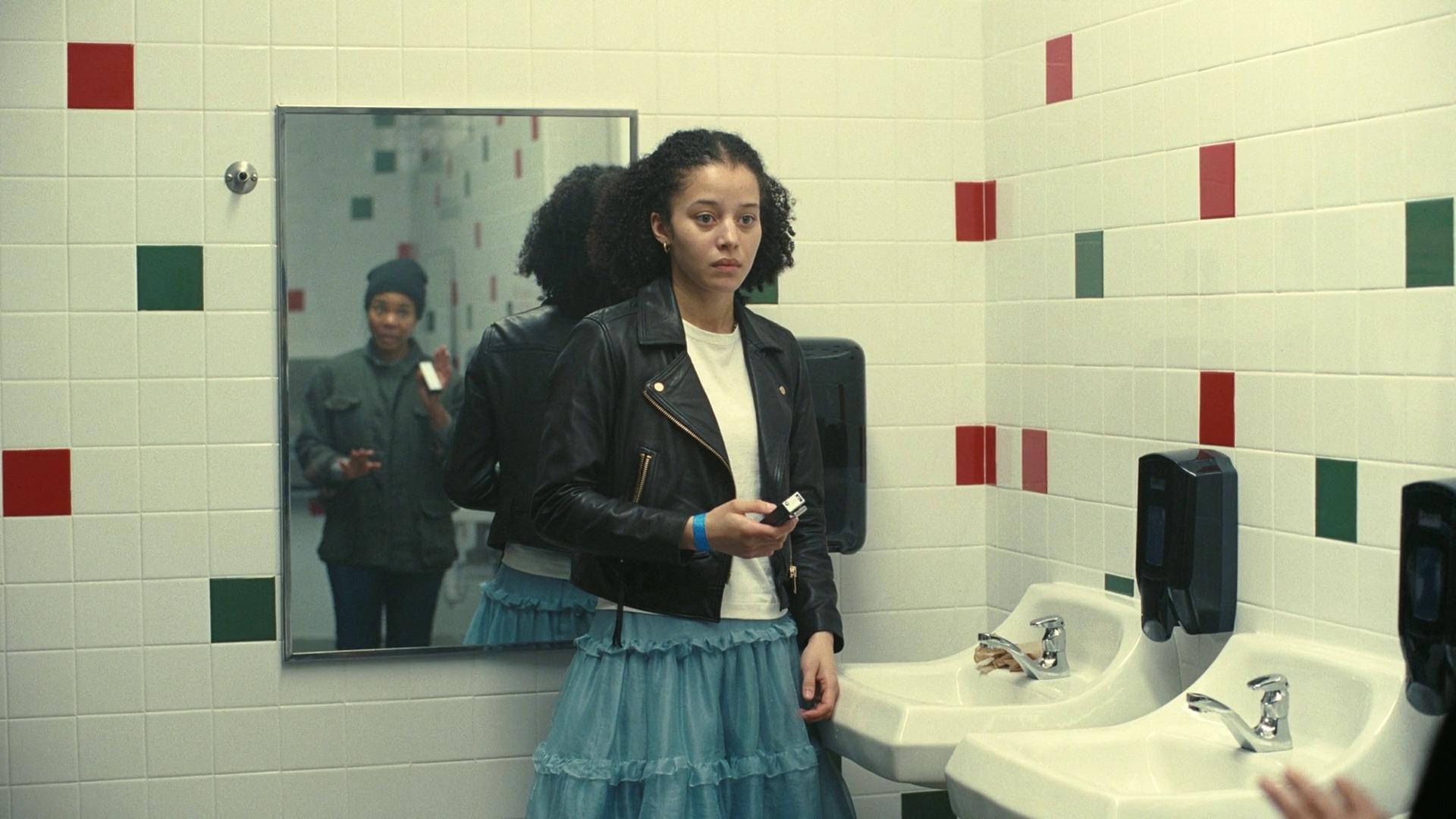
Though the name was changed so Anderson could expand, contract, add, and subtract as he saw fit, the setting and tone of One Battle After Another retains an unmistakable Pynchonian flavor in its balancing act between serious subject matter and playfulness and absurdity. Also like Pynchon, Anderson elects not to follow his satire with a sermon on repression and rebellion. He does not need to offer an alternative vision for his exaggeration to be valid, nor to find catharsis in it.
Both Bob Ferguson and Colonel Steven J. Lockjaw (and many of the minor characters) fall into a pattern of moral compromise and political extremism in order to belong to movements that they see as important, larger than themselves, and a chance to prove themselves as “pure”—Pat to the French 75, Lockjaw to the wealthy white supremacist club known as the Christmas Adventurers Club (a hint at how Bob and Willa’s lives are turned upside down)—and both suffer for it. With his lackadaisical midlife crisis, Pat is less committed to his extremist cause; he is treated less harshly and appropriately retains a little more dignity than Lockjaw. But One Battle After Another frames both forms of extremist rhetoric as dangerous; i.e. it might galvanize us, but not toward the domestic terrorism it portrays. Despite its heavy subject matter and our penchant for lumping people together as a monolithic group—which the characters in the film do as well!—the film itself is concerned with people as people, as distinct individuals with messy histories, conflicting viewpoints, and accumulated experiences.
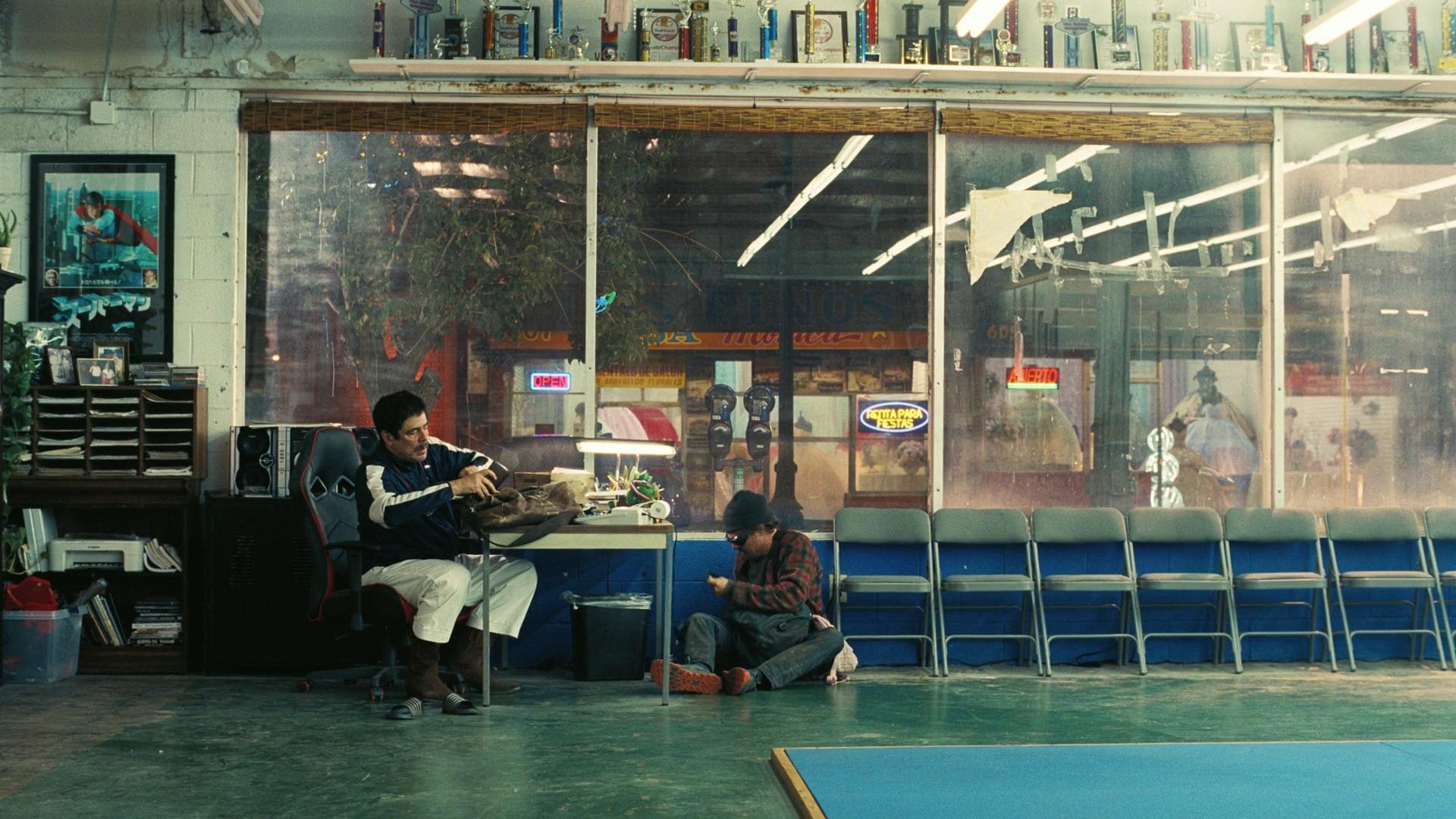
If you’ll excuse my own soapbox tangent: I have already stated that One Battle After Another does not offer an alternative worldview or any sort of way out of our current predicament. It comes close, though, in Del Toro’s karate sensei Sergio St. Carlos; he isn’t armed and in the streets, but neither is he passive in the face of evil. He is present and personable, a peacemaker. “Be the change” doesn’t entitle us to go out and harm those who disagree with us. If you claim you want to see peace and goodwill toward men, be peaceful and show goodwill toward men. Don’t kill them, or slander them, or stereotype them. Killing everyone who doesn’t share your beliefs is one way to “purify” the world, but it (hopefully) violates some core tenets of your moral worldview. In this way, One Battle After Another is not truly radical. It might have gone further and illustrated a principle Christ articulated in the Sermon on the Mount, that Christians claim to promote but which is sadly seldom witnessed: “Love your enemies.” Instead, all the energies expended by the characters are on behalf of themselves or those in their group. No one tries to build a bridge. If we take the stance that Lockjaw or Perfidia is irredeemable, we do our own part to perpetuate chaos and evil.
As Pat/Bob, with his long greasy hair, plaid bathrobe, and spaced-out persona, DiCaprio gives a performance that calls to mind Jeff Bridges in The Big Lebowski (1998) or Joaquin Phoenix in Anderson’s previous Pynchon adaptation, Inherent Vice (2014). I’ve already mentioned Perfidia Beverly Hills, Lockjaw, and St. Carlos, but there’s also French 75 members Lady Champagne (Regina Hall) and Junglepussy (Shayna McHayle, who has rapped under the name of her character for over a decade). And of course the characters act Pynchonian as well. St. Carlos presides over a “Latino Harriet Tubman situation” in a sanctuary town called Baktan Cross. Bob steps up to assist one night and, just as film magic starts to turn the rooftop excursion into something mythic and exhilarating, Bob falls off a roof and is picked up by the authorities. Hilarious. Elsewhere he tears up at a parent-teacher conference because he’s so happy for his daughter (read: he’s high); he keeps trying to pause while evading the police so he can charge his ancient cellphone, even as the sensei calmly asks Siri for directions; he gets into shouting matches with remnants of the French 75 who won’t give him info unless he spits out the lengthy phrases.
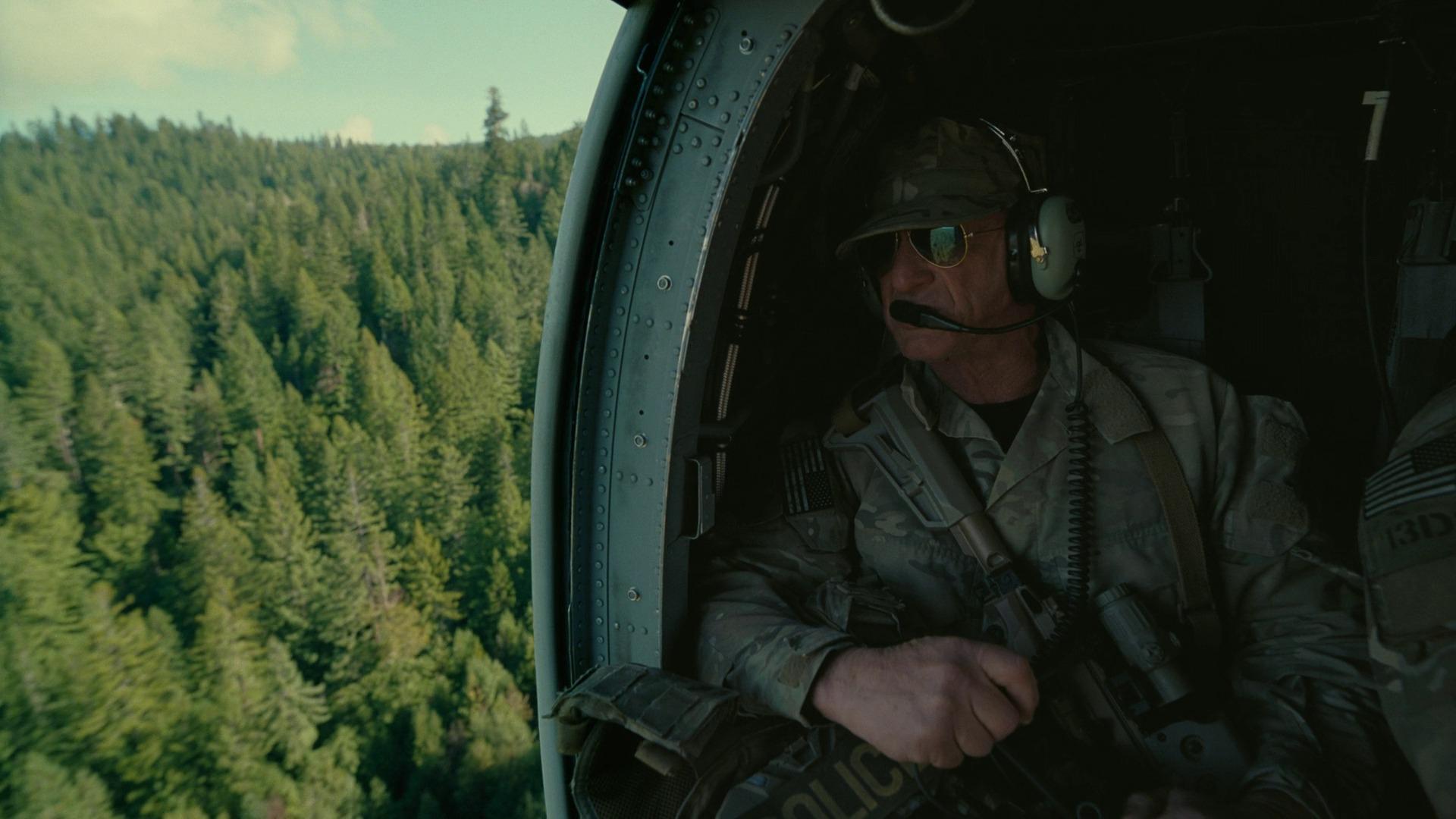
While there’s no case to be made that Anderson’s film exists outside the shadow of Pynchon, it is less indebted to other filmmakers than some of his past work—There Will Be Blood (2007) owes much to Citizen Kane (1941), for instance; Magnolia (1999) drew on Short Cuts (1993); Phantom Thread (2017) owes a lot to Rebecca (1940). If it is not viewed as his best work, it should at least be seen as one of his finest moments as an auteur, in that no other filmmaker would have had the audacity and panache to make something of this magnitude and scope with such a deft and playful hand.