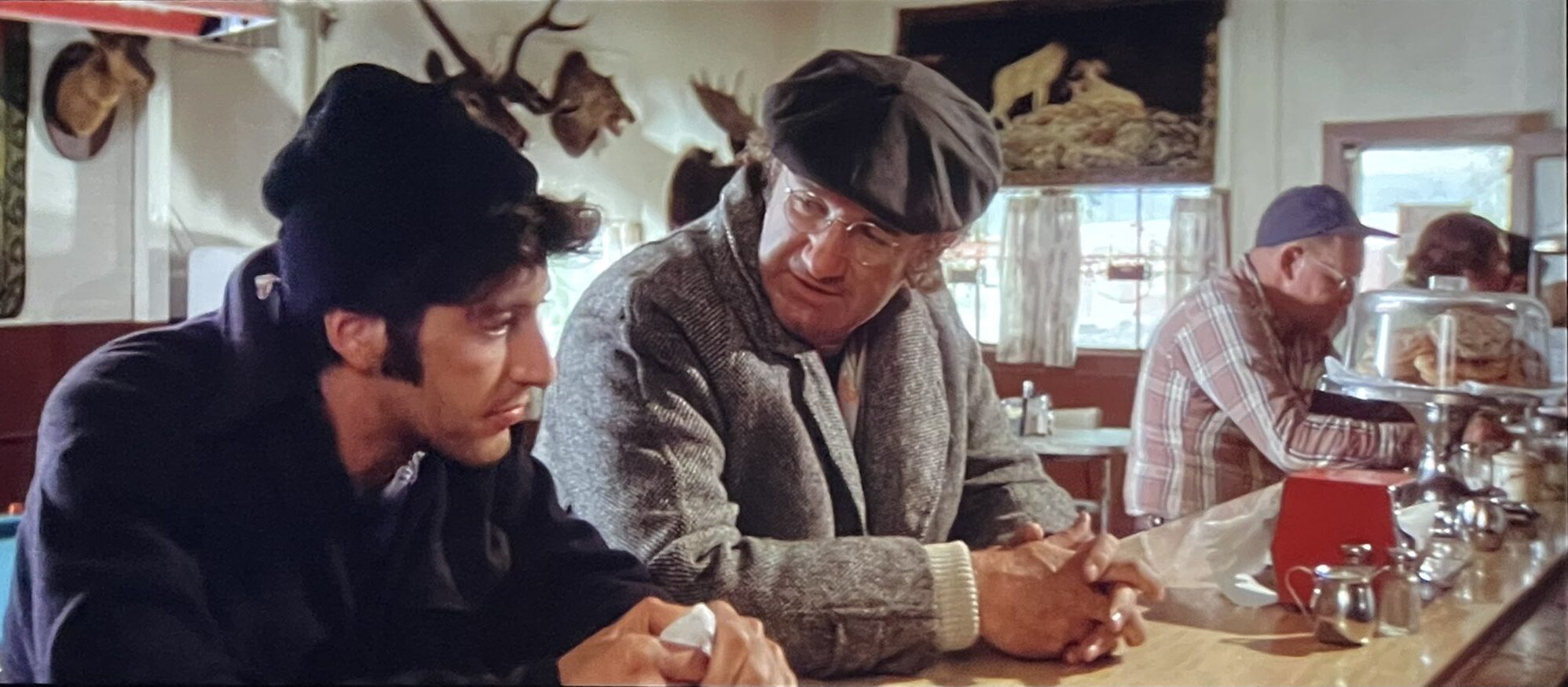
“Gimme a chocolate donut and a bottle of beer.”
When surveying the New Hollywood gang, Jerry Schatzberg tends to get overlooked in favor of visionaries and stalwarts like Francis Ford Coppola, Martin Scorsese, Robert Altman, Brian De Palma, and the like. Though the auteur theory framework is a useful analytical tool in many cases, it unfairly leaves out guys like Schatzberg who never sought to develop a stylistic or thematic signature in the way that the household names did. Despite this lack of a personal throughline, his films often exemplify the vitality and freedom of expression associated with other seminal 1970s productions.
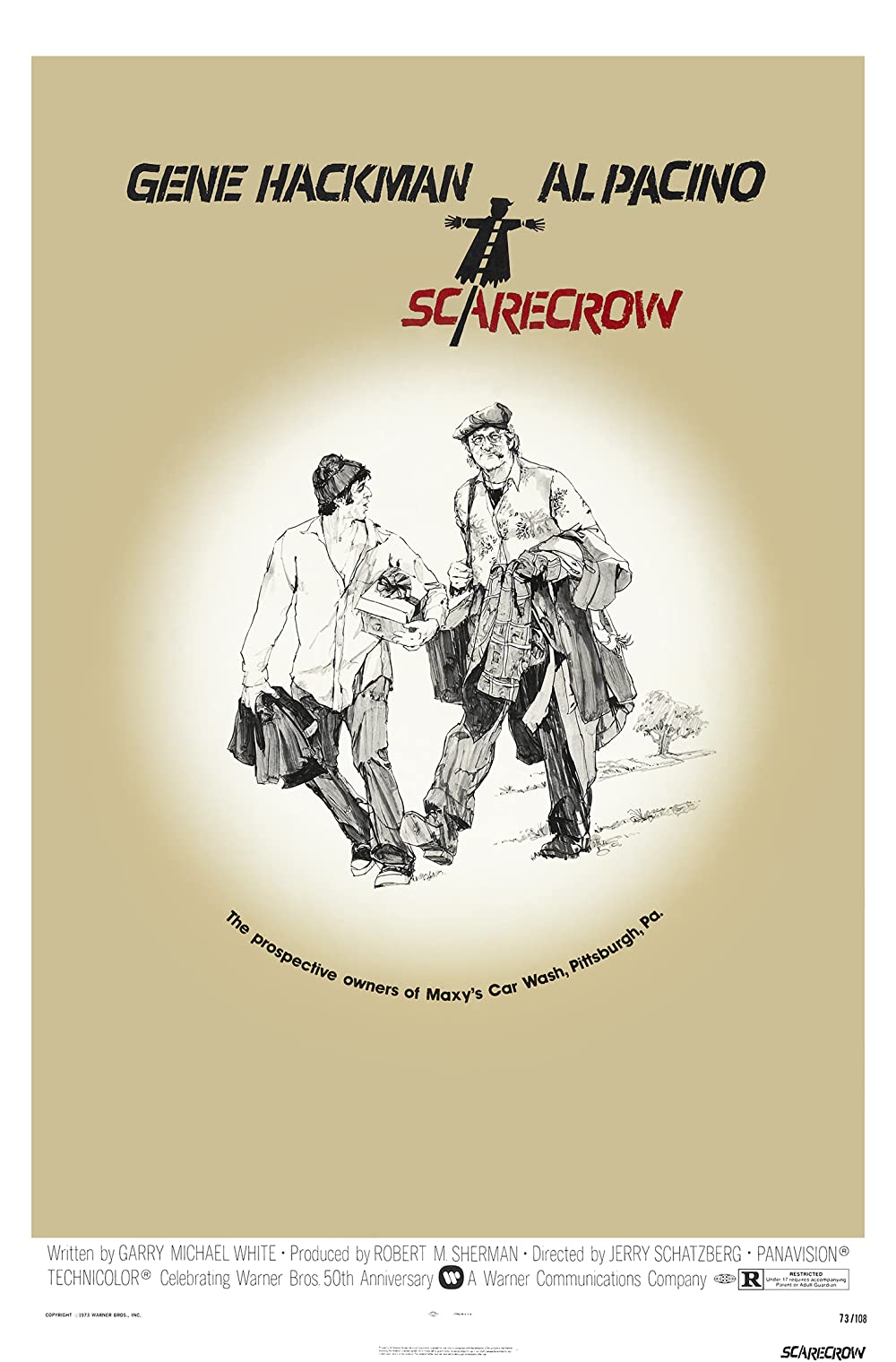
Worth considering is his third film, Scarecrow, a road movie with a palpable air of ragged authenticity that turns the ordinary struggles of a couple of vagabonds into an extraordinary character study. It’s a familiar scenario for those who’ve seen Easy Rider or Midnight Cowboy—a lament for the dissolution of the American Dream.
Gene Hackman and Al Pacino, two of the era’s most gifted icons, star as Max and Lion, an angry ex-con and an offbeat sailor, respectively, who meet while hitchhiking and decide to partner up and open a carwash in Pittsburgh. Leisurely almost to a fault, the film ambles along as the duo nomadically wanders across the country and deepens their peculiar, platonic friendship, making stops at a sister’s in Denver and a prison farm before stalling out in Detroit where Lion plans to visit a son he’s never met.
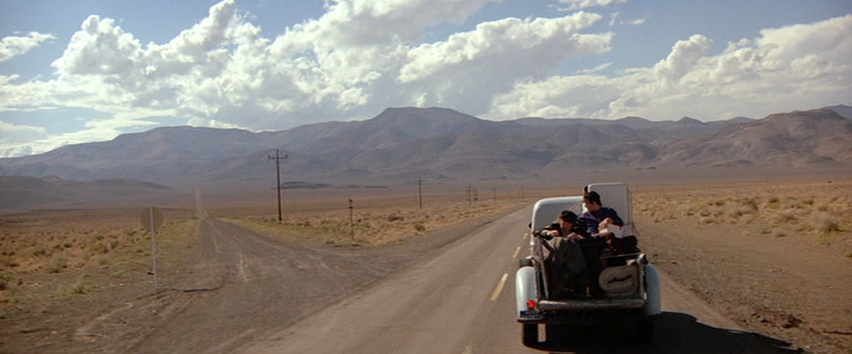
Schatzberg and DP Vilmos Zsigmond use the dusty roads, open landscapes, grungy taverns, greasy spoons, flophouses, junkyards, boxcars, and work farm fences to create an evocative Americana wasteland atmosphere against which the loose, downbeat drama is set. Just as the locales encompass a vast sprawl of backcountry, so the narrative embraces a freewheeling sensibility, giving over large chunks of cinematic real estate to run-on conversations, ruminative interludes, and extended low-key gags (at one point Max alleviates some drunken tension by performing a striptease at a bar; if I counted correctly he began the scene wearing six shirts).
Scarecrow does make a few blunders, chief among them that it spends much too much time discussing the metaphor of its title and that its third-act histrionics don’t feel like the right conclusion for Max and Lion’s story. Although it must be said that Pacino totally nails his final scene. But for the most part it’s an attractive, melancholy road movie about two outcasts that Hackman and Pacino are given all the freedom they could want to make their own. In the masterful hands of those two legends, these desperate, downtrodden drifters who’ve destroyed their own lives become achingly sympathetic figures, each experiencing unique emotional journeys.
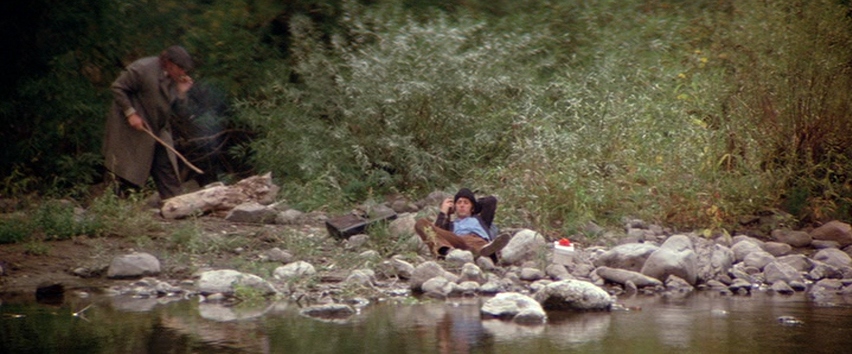
Scarecrow might not get the recognition of titles like The French Connection, The Conversation, and Dog Day Afternoon—all 1970s films with similar themes, starring Pacino or Hackman, made by big names (William Friedkin, Francis Ford Coppola, Sidney Lumet)—but it is as emblematic of the decade’s disillusioned attitudes as any of its more famous contemporaries, not to mention characteristic of a lost style of uninhibited mainstream filmmaking.