“I don’t hate my fellow man, even when he’s tiresome and surly and tries to cheat at poker. I figure that’s just the human material, and him that finds in it cause for anger and dismay is just a fool for expecting better.”
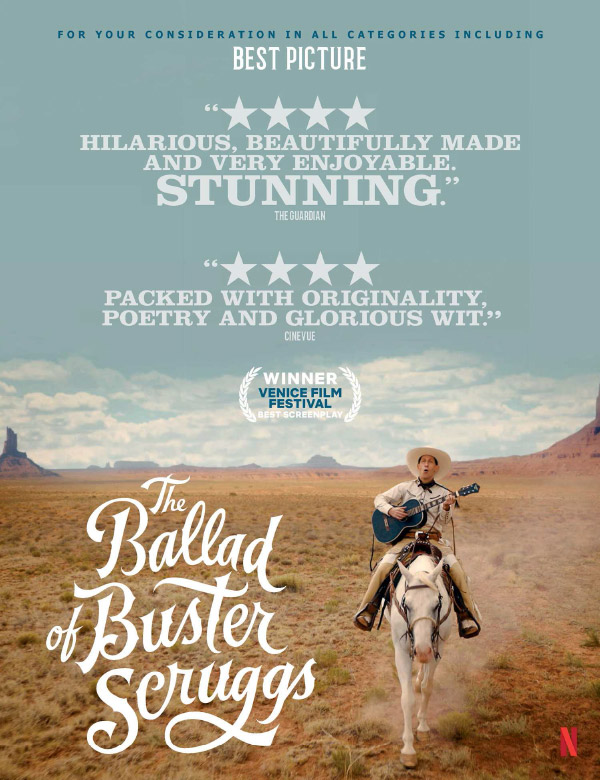
To the unattuned eye, Joel and Ethan Coen’s The Ballad of Buster Scruggs might seem to begin as a classical Western. A lonely cowboy (Timothy Blake Nelson) in white duds, sitting astride a horse, strumming a guitar and crooning as he meanders through the desert at his leisure. It’s self-consciously leaning into old archetypes. But it quickly becomes apparent to all and sundry that this film is hyper aware of its genre, its heritage, and itself. This is most clearly observed in the obtrusive style—a shot from within the guitar (the music becomes muted), narration delivered directly to the camera, cartoonish cheeriness. But even as our cryptic outlaw sidles into a grubby saloon and starts slinging lead at the slightest provocation, his heinously violent actions and their gruesome depiction betray an effort to subvert the expectations set by the film’s aesthetic trappings.
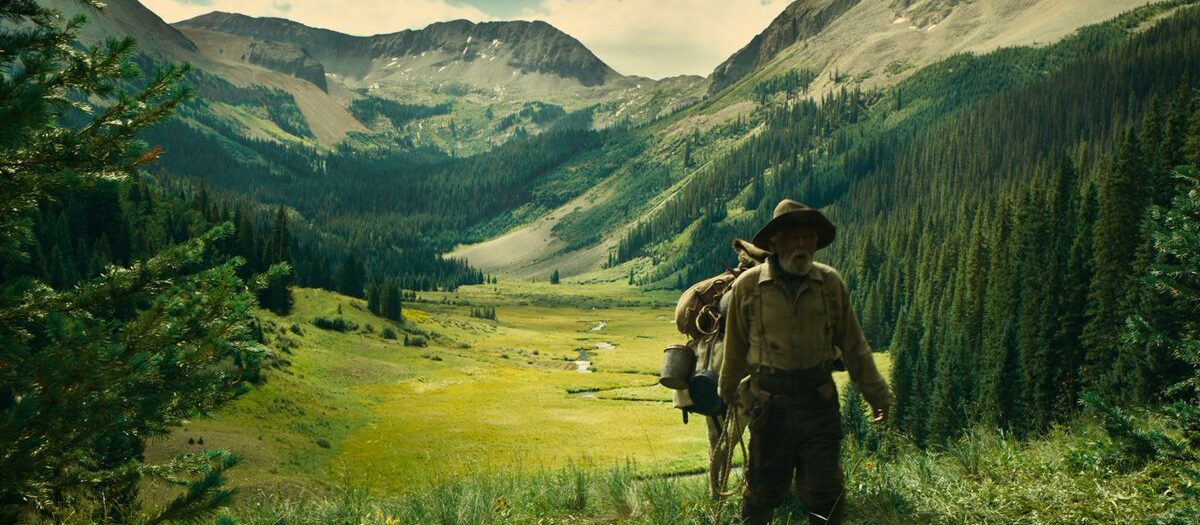
An anthology film that surveys the evolution of the Western (taking cues from the likes of John Ford, Sergio Leone, and even the talky Westerns of Quentin Tarantino), The Ballad of Buster Scruggs carries on in this vein for some time, moving on from Buster’s opening vignette to a darkly humorous tale of a bank robber (James Franco) who meets his match in the form of a wily bank teller (Stephen Root) who shields himself with makeshift armor fashioned from pots and pans. We witness a taciturn impresario (Liam Neeson) and limbless orator (Harry Melling) amble about the Old West with their traveling show and perform to dwindling audiences; a grizzled gold prospector (Tom Waits) find fortune in a remote mountain valley; a romance develop between two settlers (Zoe Kazan, Bill Heck) traveling the Oregon Trail; and a stagecoach discussion of human nature between two bounty hunters (Brendan Gleeson, Jonjo O’Neill), a fur trapper (Chelcie Ross), a religious lady (Tyne Daly), and a Frenchman (Saul Rubinek).
As the episodes come and go, each picking up and examining a new timeworn element of Western mythology, the morbid comic homage of the opening salvo gradually gives way to the wicked sarcasm, shock violence, and tainted existentialism common to the Coen brothers’ oeuvre. Arrows pierce throats, scalps are claimed, a third of the stories end with a bullet through the lead’s forehead. Though these filmmakers have made a legitimate Western (True Grit) in the past and used the genre’s formulae and iconography throughout their career(s), with The Ballad of Buster Scruggs they embrace the modern tendency toward revisionism, offering a half dozen sequences of grue, calamity, and nihilistic angst that paint a desolate portrait of frontier life, where the resiliency of the human spirit falls victim to the depravities of the flesh. In the hands of the Coens, the Old West becomes a debauched place populated by walking tragedies undeserving of mercy or forgiveness or even life. In such a futile environ, what is there to do but laugh?