“Preoccupied with superstitions of centuries past, he became a dreamer for whom the line between the real and the supernatural became blurred.”
While I tend to think that nitpicking incoherent plots is, in general, a poor use of one’s time, this is especially true when it comes to atmospheric, paranormal horror films—moving pictures that bespeak the magical qualities of cinema as a dream language, in which rational logic is distorted and mysterious intuitions act as a guide. These films must still cohere, in some sense of the word—they’re not unbounded surrealist works—but building a clear-minded cause-and-effect story is emphatically not a requirement. Indeed, their very power derives in part from their narrative instability.
Think of the dark, dreadful fantasies of David Lynch (Eraserhead, Lost Highway, Inland Empire) or the feverish nightmares of Dario Argento (Suspiria, Inferno). (Conversely, consider Christopher Nolan’s Inception, which takes an extremely cerebral, logic-based approach to the world of dreams.) The core narratives of these films are somewhat elusive, sometimes even uninteresting when laid out in plain terms—but when you’re face-to-face with them, they take on an intoxicating potency that reveals the raw, numinous power of the audiovisual cinematic medium. We are spellbound precisely because we can’t quite grasp the underlying machinery at work.
It’s always hard to pinpoint the genesis of certain styles and trends in art—especially when time constraints dictate that following Martin Scorsese’s suggestion to “study the old masters, enrich your palette, expand the canvas,” is a futile endeavor in which one is perpetually playing catch-up—but it is perhaps correct to identify Carl Theodor Dreyer’s first sound film, Vampyr, as the genesis of the oneiric film style. Previously, broadly speaking, I would have comprehended Lynch’s sinister style by viewing it through the lenses of Maya Deren’s Meshes of the Afternoon and Federico Fellini’s 8½, but Dreyer’s film proves just as appropriate an urtext while also being much older than either of those films.
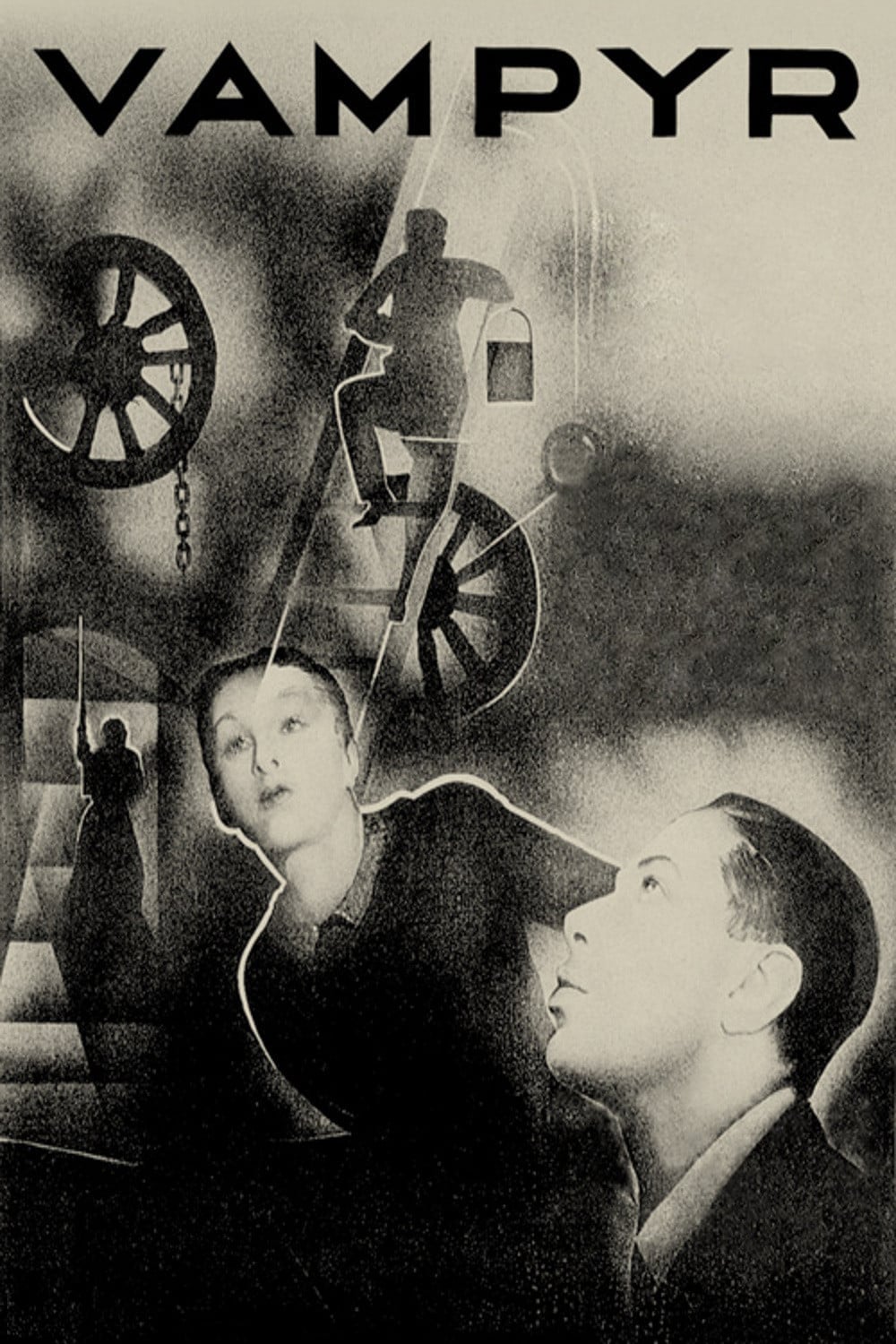
Released in 1932, Vampyr would very likely endure on the merits of its aggressive vampire theme and eerie, breathtaking imagery, which makes use of brilliant practical effects, a pre-flashed or gauze-filtered haze of the film stock, and a surprisingly mobile camera. However, its most compelling element for the modern viewer is its peculiar visual syntax, which breaks conventional rules of perspective and continuity at every turn and yet remains totally persuasive.
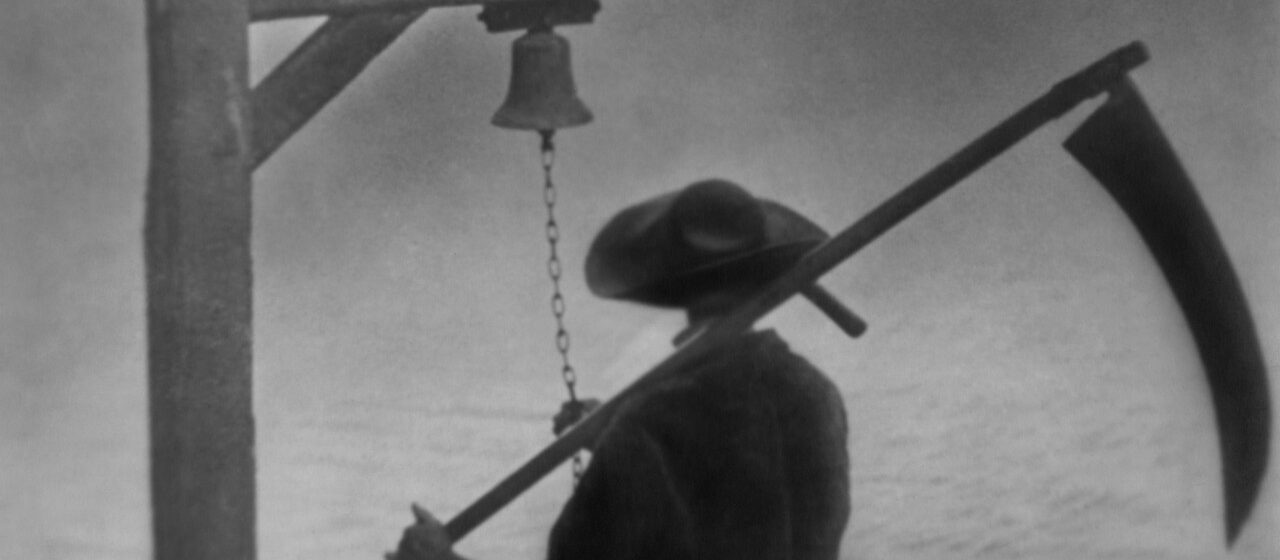
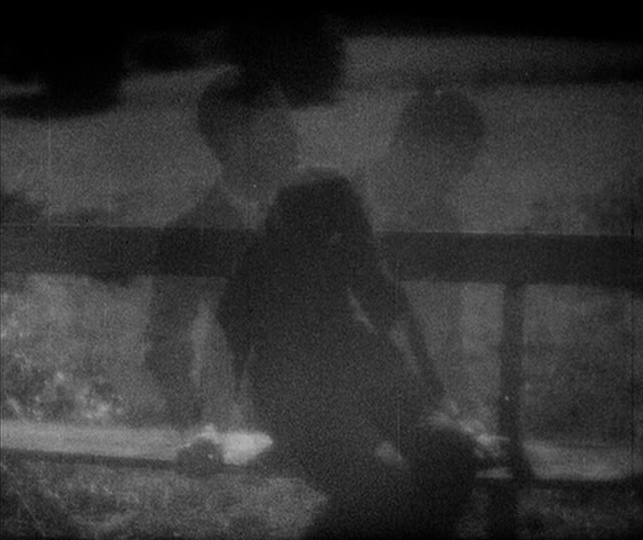
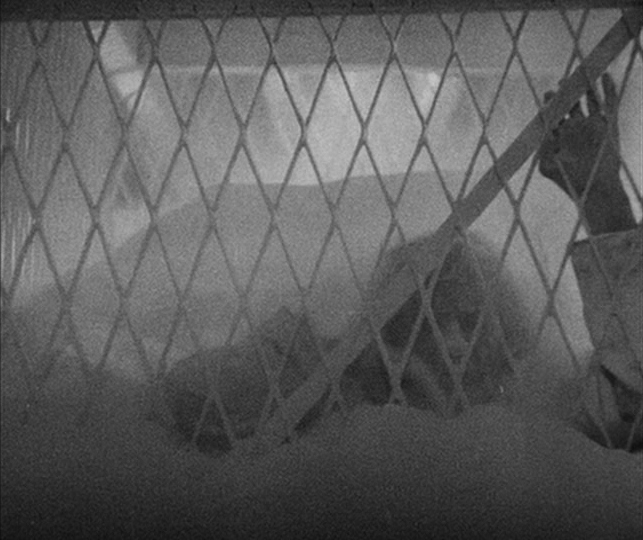
Many of these sequences are captivating in a vacuum—a scythe-wielding mute prowls the riverside; a coffin is transported while we watch from the cadaver’s point of view, and then from the dead man’s transparent doppelgänger’s perspective; a doctor (Jan Hieronimko) suffocates under a deluge in a flour mill; silhouettes skitter around without bodies to account for them; a newly turned vampire (Sybille Schmitz) hungrily leers at her sister (Rena Mandel) in extreme close-up. But what do we make of something like the repeated image of a shadow digging a grave, in reserve, that is inserted in various places so as to suggest no consistent point of view or chronology, or even a precise material plane? Or the creepy old disfigured man who shows up at the inn in menacing fashion and then never reappears?
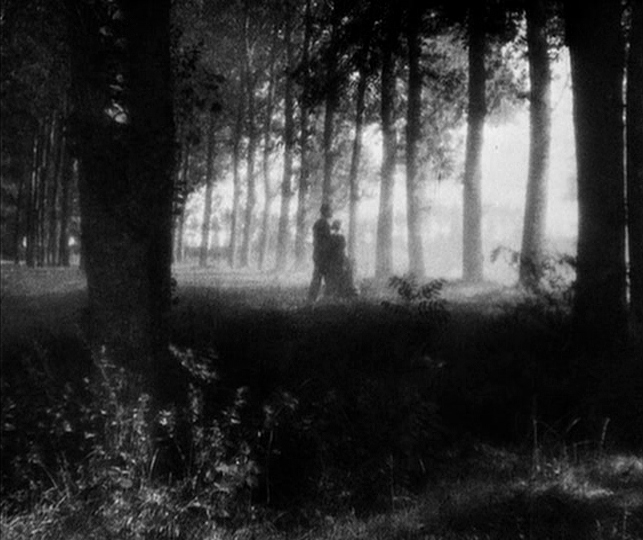
Very little of this moves forward in a rationally comprehensible way. Dreyer seems to be deliberately toying with the audience’s conditioned understanding of continuity editing, betraying expectations left and right but working with a definite narrative logic and cinematic vocabulary. These unfamiliar techniques that allow him to lure the audience into a potent, liminal realm, blurring the precise boundaries as he goes along. Just as our protagonist (Julian West, AKA Baron Nicolas de Gunzburg, the film’s financier) wanders around in a disoriented stupor, letting these intangible cosmic horrors bleed out of the ether and wash over him without flinching, so we, the audience, sit in rapture, fascinated by the pleasurably uncanny experience unfolding before us. Other contemporary horror films, like Robert Wiene’s The Cabinet of Dr. Caligari, F.W. Murnau’s Nosferatu, James Whale’s Frankenstein, and Tod Browning’s Dracula, are classics in their own right, but none are quite so effective at burrowing their way into the viewer’s subconscious as Vampyr. It doesn’t make rational sense, and yet, like a nightmare, it unsettles.
Richly atmospheric, profoundly haunting, and crucial in the development of the language of cinema, Vampyr is a timeless landmark of the medium and essential viewing for students of film history; an ambitious forerunner of countless classics that came at a time when cinema was the most revolutionary medium in human history.