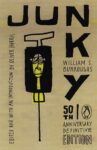
Junky
Burroughs surely deserves more credit as a guerilla ethnographer than a literary author.
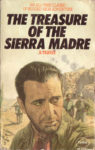
Although it doesn’t have the charm of John Huston’s film, its exploration of the psychology of greed—and how repeatedly succumbing to such avarice can lead to the corruption and destruction of both the individual and society—is worthy enough on its own merit.

Jody’s experiences are often unforgiving, and like many of John Steinbeck’s books, this one is full of sadness, pain, and regret.

Nabokov creates new words and organizes others into phrases that were likely never uttered before.

Gritty in detail, creative in structure, delightfully verbose; McCarthy’s grasp of the English language is breathtaking.
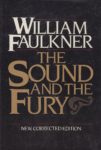
piecing together these fractured thoughts imparts more than the family melodrama that provoked them.
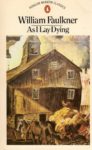
By presenting the journey from varying perspectives, the circuitous story weaves a robust, if messy, emotional tapestry.
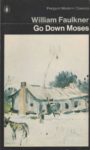
It is purposefully not an easy read, but it is rewarding for those who put in the effort.
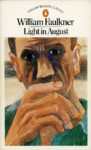
Mellifluous, polysyllabic, and archaic words sometimes mask a tenderness toward the novel’s afflicted human subjects, but Faulkner’s consummate artistry is worth the emotional distance.
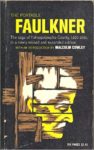
You won’t understand each reference the first time you read a story, but eventually the world starts to take shape.