“We work in the dark, to serve the light.”
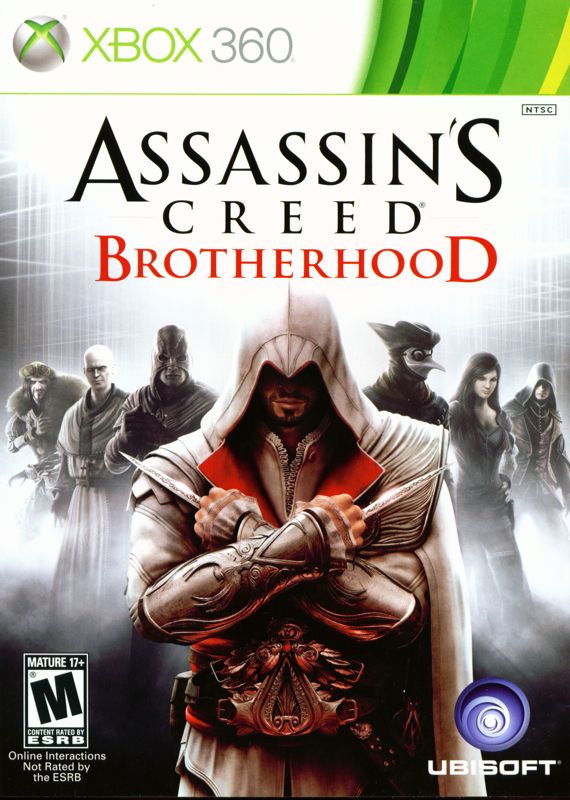
Best considered as a massive expansion pack for Assassin’s Creed II, Assassin’s Creed: Brotherhood continues the stories of Desmond Miles (the series’ ostensible protagonist, who spends most of his time strapped into the Animus so we can play through his ancestors’ memories, though he does get a bit more to do this time around) and Ezio Auditore da Firenze (the ancestral avatar of the second game), while providing some meaningful new gameplay elements and introducing a few novel issues not present in previous titles.
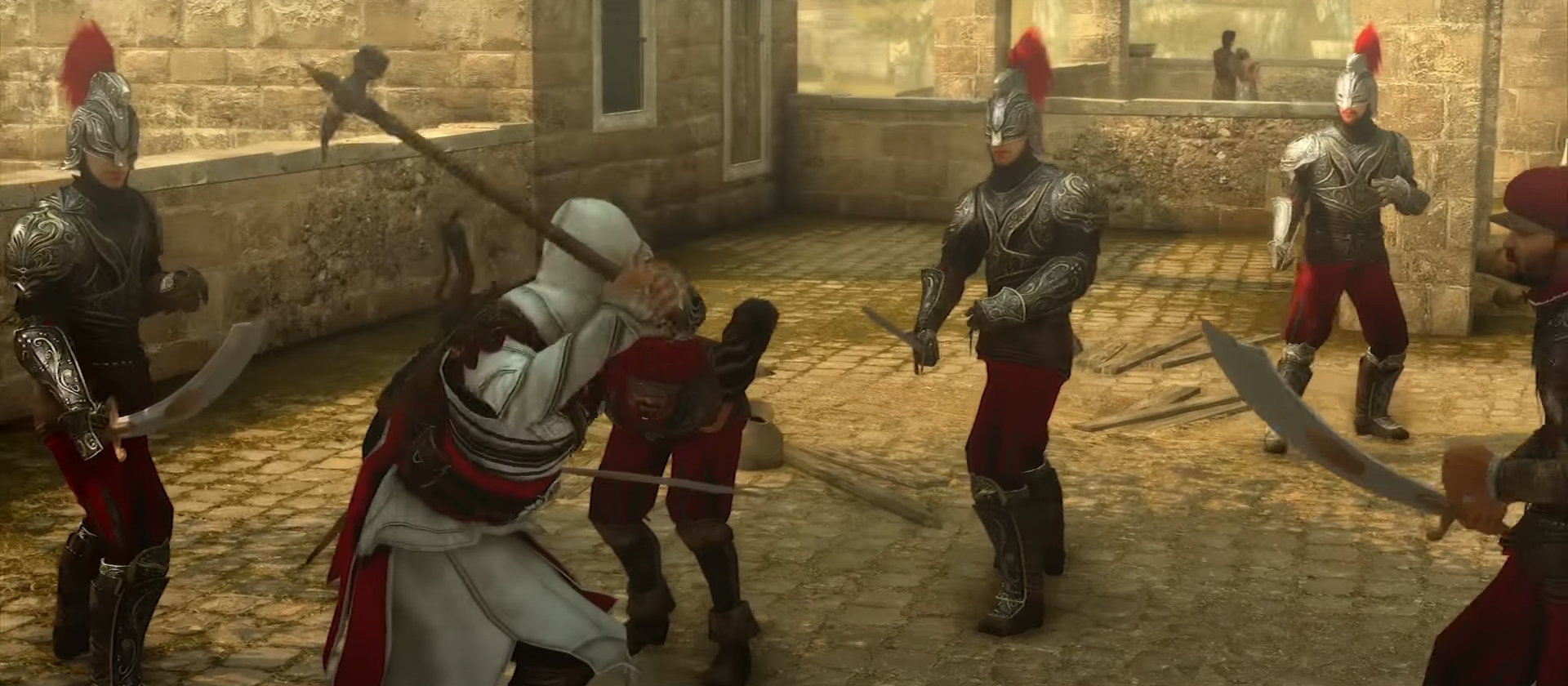
Among the improvements are less predictable and more fluid combat, a handful of new da Vinci gadgets, and the titular guild system for training novice assassins who can be called upon to bail the player out of dicey situations or to participate in orchestrated massacres. It really never gets old, being the harbinger of death, sneakily approaching your target and then signaling your team of silent assassins to pop out of the woodwork for a brutal takedown.
The story is fairly rich within the context of the series’ janky high-concept time-hopping Dan Brown fantasy, shifting the historical setting from Florence/Venice/Monteriggioni/etc. to a crumbling Rome in need of deliverance while ramping up the present day intrigues with a doomsday scenario. It manages to include a scene in which a Passion Play in the ruins of the Colosseum serves as the setting for an assassination attempt (which Ezio is tasked with preventing), without coming across as corny or sacrilegious.
The side missions are a revelation—exploring tombs, hunting down Borgia captains to liberate their provinces, destroying war machines created by da Vinci under threat. It’s a densely packed game and very little feels out of place. I particularly enjoyed the leveling system for the novice assassins (though it ultimately has little bearing on the story) and the expanded economy system, wherein renovating dilapidated buildings and installing merchants after ridding a territory of Borgia influence leads to discounted goods and a steady cash flow.
Less enjoyable are missions where you fail if you are spotted. The game’s social stealth mechanics simply aren’t suited for the Metal Gear Solid playstyle. A few other less conventional missions, such as when you don a disguise and have to listen to your traveling companions for vague directions or else make them suspicious, serve only as tedious breaks in the action. The freerunning is once again hit-or-miss, functioning smoothly in areas specifically designed for rhythmic traversal but frequently causing frustration when Ezio misinterprets your intentions. A bunch of these little nitpicks add up over the course of the game, marring what is otherwise a quite enjoyable experience.
In any case, Brotherhood is far from the quick cash-in that it was seen as prior to release (and which Revelations actually is). Though it reuses many assets from its predecessor, moves further away from the series’ original pitch of free-form stealth, and liberally borrows elements from all sorts of other games—Prince of Persia, GTA, Tomb Raider, Devil May Cry—it is a solid title in its own right and a worthwhile addition to the AC franchise.