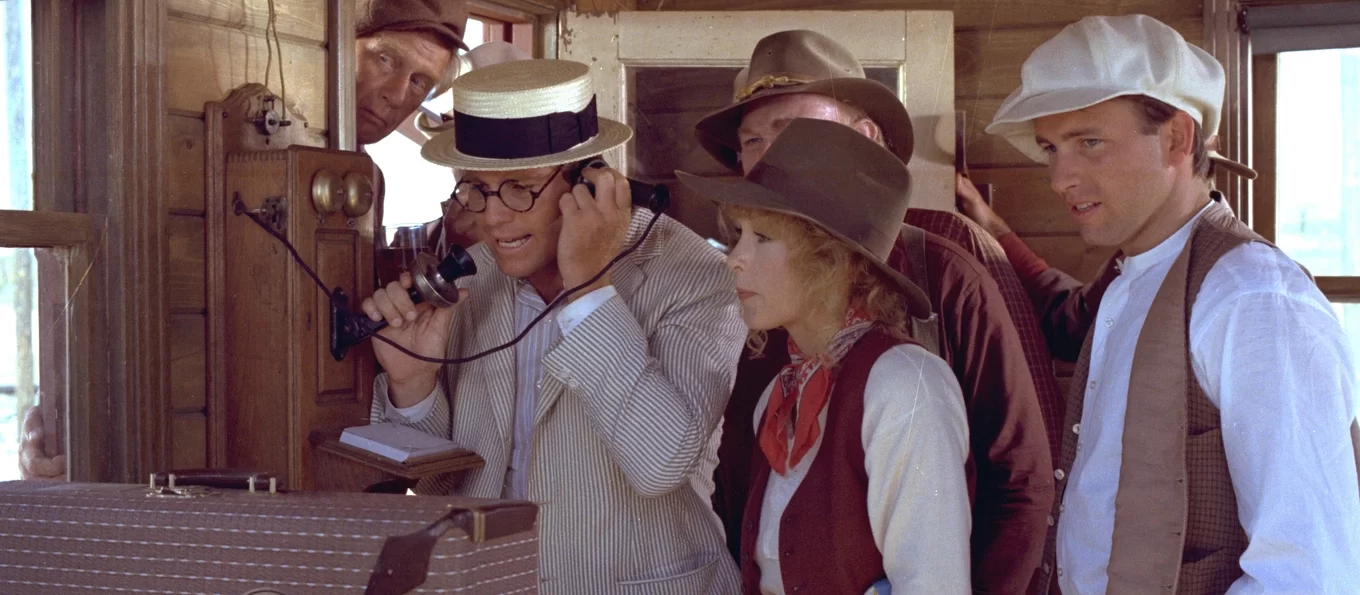
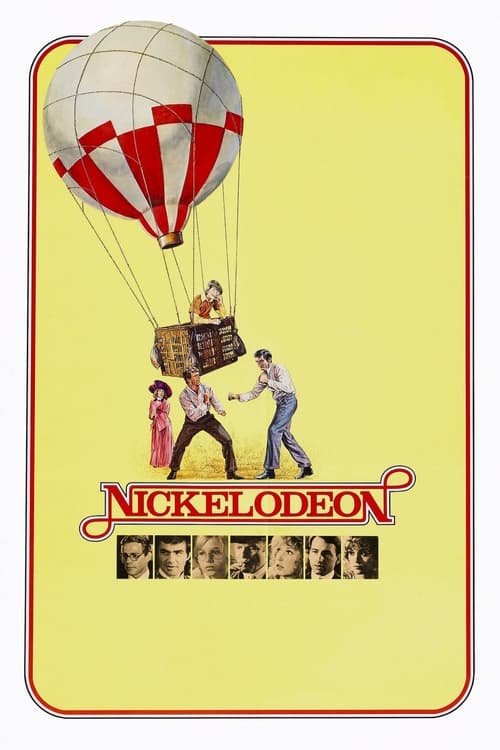
“The pictures are a language that everybody understands. It’s like music for the eyes. And if you’re good, if you’re really good, then maybe what you’re doin’ is you’re giving ‘em little tiny pieces of time that they never forget.”
It’s impossible to doubt Peter Bogdanovich’s sincerity and passion in making a film like Nickelodeon. In addition to writing and directing and acting in movies, he spent his life and career interviewing the medium’s titans, writing film criticism, and directing documentaries about figures like John Ford and Buster Keaton. He was a film buff who lived and breathed cinema. And yet his instincts, and maybe his outsider tact, let him down here as they did from time to time, leaving us with a jovial film clearly made with zeal that never feels like anything more than a sum of its parts. Those parts, perhaps intentionally given the silent film era setting, tend to feel like two-reel shorts tied together by a thin thread; an uncertain mix of easygoing slapstick and calculated pathos that somehow culminates in an awkward ode to D.W. Griffith’s The Birth of a Nation.
Concerning a group of fledgling filmmakers who stumble into the trade by way of circumstance and inborn audacity, Nickelodeon offers a humorous take on the Motion Picture Patents Company power struggle through a series of linked vignettes spanning about a year. It stars Ryan O’Neal as a lawyer-turned-writer/director, Burt Reynolds as an opportunistic leading man, and Tatum O’Neal as a precocious child skilled at negotiation. There are also enjoyable supporting roles for the likes of Brian Keith, Stella Stevens, James Best, John Ritter, and M. Emmet Walsh.
Bogdanovich states that he completely rewrote the script from W.D. Richter that he was given by the studio, putting in anecdotes gleaned from conversations with older directors such as Alan Dawn and Raoul Walsh and John Ford and Leo McCarey. One such story sees O’Neal, behind schedule on a project, ripping a handful of pages out of the script and declaring that things were back on track. Ironically, the production woes and creative disagreements behind the scenes on Nickelodeon prove more interesting than the compromised finished product, which is stuffed with early Hollywood esoterica and homage but never evokes the enthusiasm for its subject that it clearly aspires to. Still, it’s more of a disappointment over what-could-have-been than an outright failure. Notably absent on home media for far too long, Bogdanovich finally got his way—kind of—when the 2009 director’s cut was presented in black-and-white.