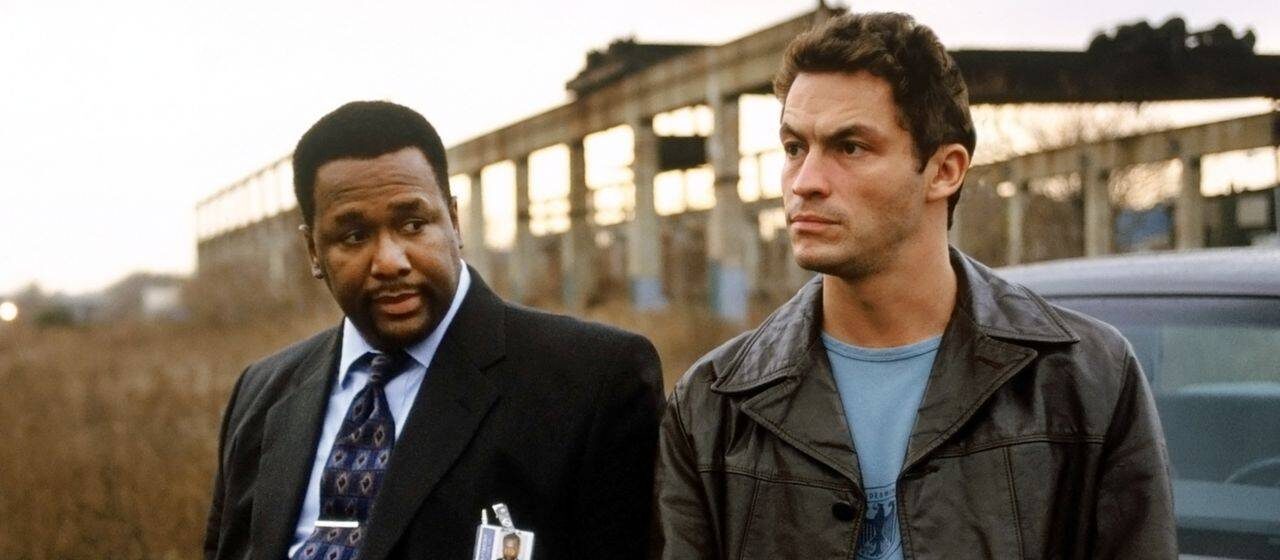
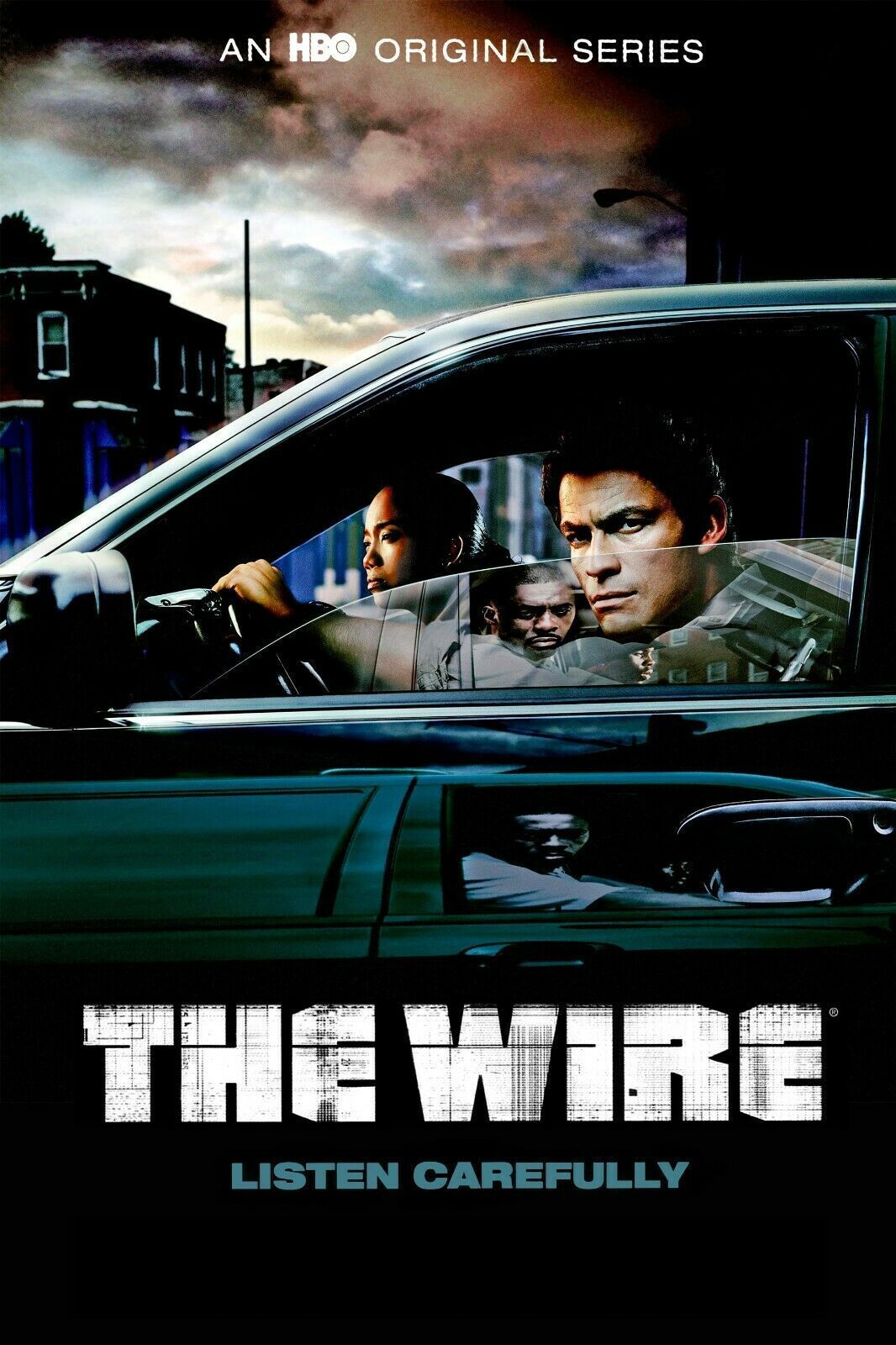
“A clean desk is the sign of a sick mind.”
I’ll fall in line with everyone else and agree that the fifth and final season of HBO’s crime drama The Wire doesn’t provide the fitting end that the series deserved, although its closing montage, which offers brief glimpses into the lives of most of the series’ surviving primary and secondary characters, does give us an incredibly harrowing coda. It shows how some have made positive changes, but most have either fallen into bad habits or chosen to sell out their principles. How can you not feel a pang of deep sadness at seeing Dukie (Jermaine Crawford), the high-school dropout who had been mentored by former police detective turned middle school teacher Roland Pryzbylewski (Jim True-Frost), pumping his veins full of heroin in back alley?
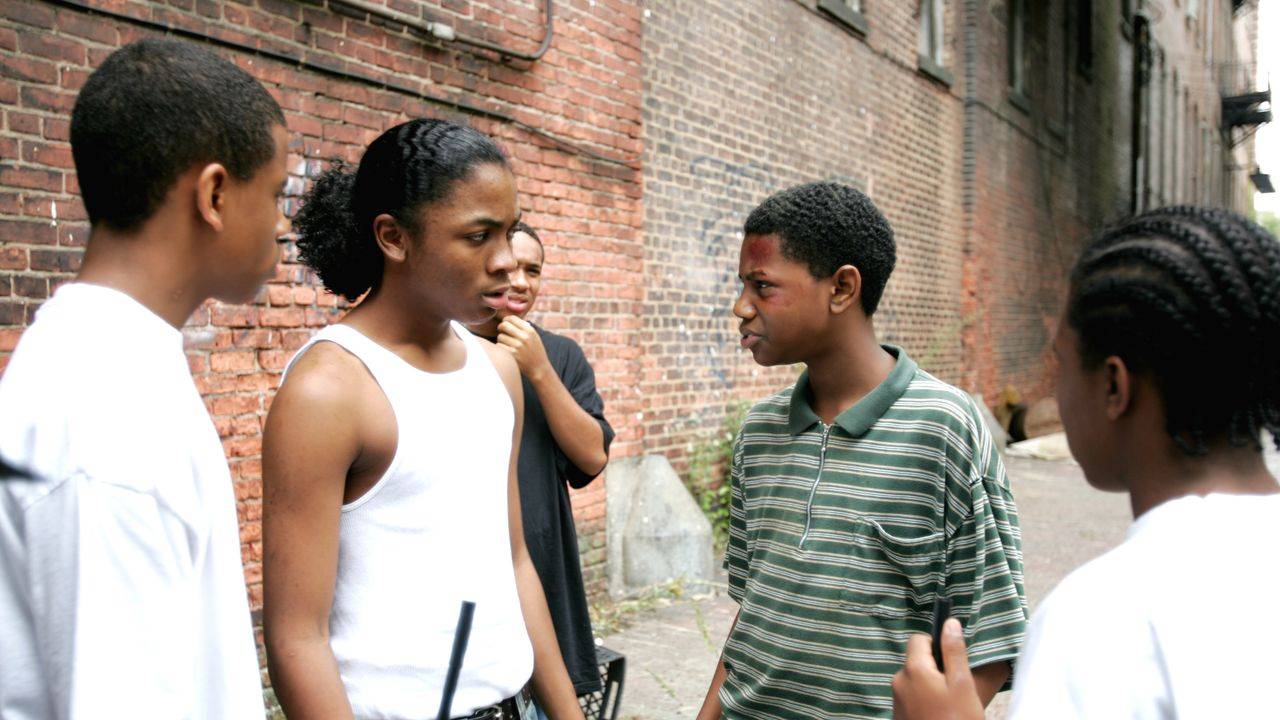
The differing outcomes of two of Dukie’s classmates provide a stark contrast between potential futures for young kids growing up on the streets of Baltimore. Namond Brice (Julito McCullum), a former corner boy whose father Wee-Bey (Hassan Johnson) spends most of the series behind bars, has been adopted by former police major Howard Colvin (Robert Wisdom) and is no longer associated with the drug game; Michael Lee (Tristan Wilds), who matured under the tutelage of ruthless drug enforcer Chris Partlow (Gbenga Akinnagbe), now uses his knowledge of the street to make a living by robbing drug dealers.
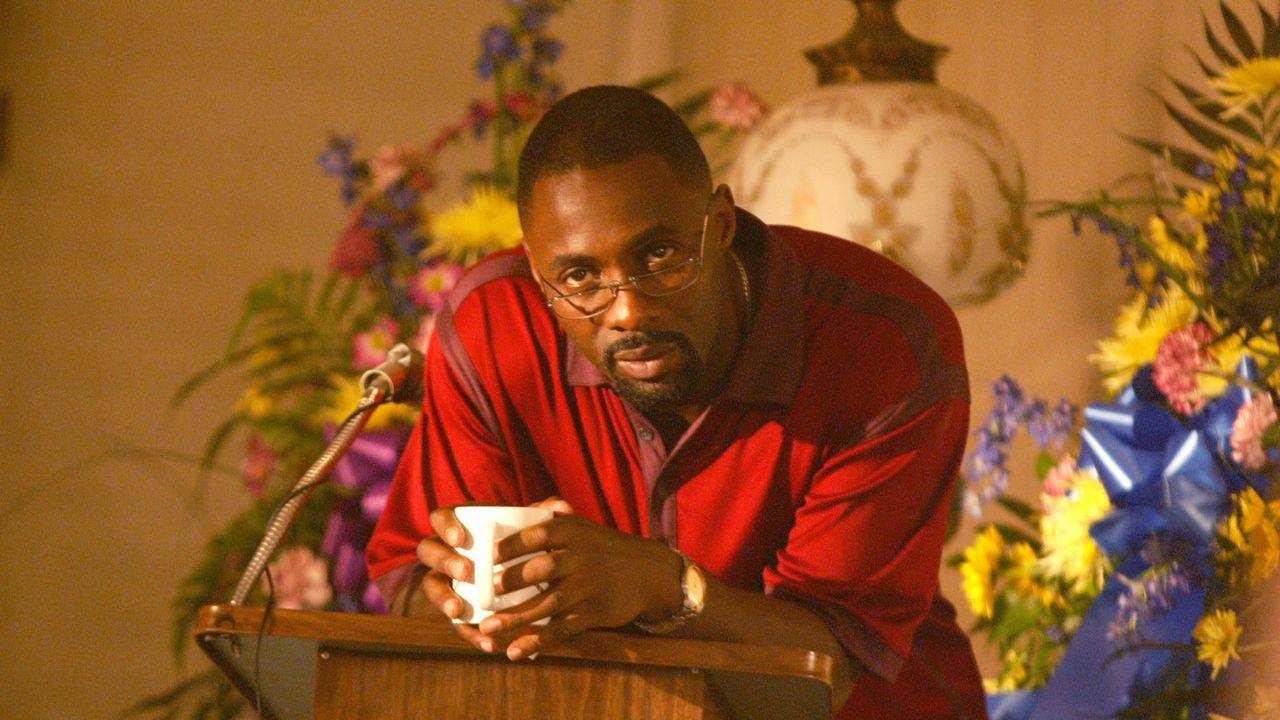
That’s the thing about The Wire—it manages to create perhaps the largest roster of authentic characters in television history and place them in a realistic environment, which allows series creator David Simon to develop a cutthroat drama in which no single character is ever safe from the criminal aspect of Baltimore. I’ve mentioned seven characters already, and none of them would be considered one of the show’s “main” characters. In the first season, an emphasis is placed on D’Angelo Barksdale (Lawrence Gilliard Jr.), the nephew of West Baltimore drug boss Avon Barksdale (Wood Harris) and lieutenant in his organization. Stuck between the daily street-level grind and the dog-eat-dog world of being a boss, Dee exhibits a more nuanced perspective than other gangsters. The merciless nature of the drug trade gradually wears on him, and finally, he ends up being murdered in prison on the orders of Stringer Bell (Idris Elba), Avon’s second-in-command, who suspects the young man might flip and incriminate the whole enterprise.
His death comes as a complete shock—after all, he’d received “main character” treatment up to this point. How could they just kill him off? But then you realize that the nature of the series is to show how unforgiving and relentless the streets really are. Someone else will step into his shoes. Even worse, someone more cold-blooded will step into the void left when Avon is incarcerated and Stringer is gunned down in a vacant highrise—the up-and-comer Marlo Stanfield (Jamie Hector). As the episodes pile up, jaded criminals who wish to become legitimate businessmen find themselves unable to leave the game, corrupt union treasurers turning a blind eye (Chris Bauer) find themselves in over their heads, idealistic politicians (Aidan Gillen) realize that staying at the top requires a gross compromise of one’s morals, and career police come to understand that the stats-driven war on drugs is just a war on the poor.
We used to make shit in this country. Build shit. Now we just put our hand in the next guy’s pockets.
With each season, The Wire introduces a different institution and explores its relationship to law enforcement, all the while juggling ongoing storylines from previous seasons. First it’s the drug trade, then the port system, followed by the city government, the education system, and finally, print news, which elucidates why the years of drama that we’ve watched unfold barely justify a few inches of newspaper column. The unifying element is the team of police officers and jurists who attempt to uphold the law despite critical shortages of funding and manpower, low morale, and institutional corruption.
If there’s a lead it’s Jimmy McNulty (Dominic West), a homicide detective who struggles with authority, alcohol abuse, and womanizing and has one of the all-time great smirks. Surrounding him is a vast collection of regulars and recurring characters, ranging from his law enforcement superiors (John Doman, Frankie R. Faison, Lance Reddick, Al Brown) to his colleagues (Sonja Sohn, Clarke Peters, Amy Ryan, Seth Gilliam, Domenick Lombardozzi, Corey Parker Robinson) to lawyers and judges (Deirdre Lovejoy, Michael Kostroff, Peter Gerety), politicians (Reg E. Cathey, Glynn Turman, Neal Huff, Isiah Whitlock, Jr., Maria Broom, Marlyne Afflack), underbosses (Paul Ben-Victor, Robert F. Chew, Wu-Tang Clan’s Method Man, Anwan Glover), corner men (J. D. Williams, Tray Chaney, Michael B. Jordan), enforcers (Felicia Pearson, Michael Potts), community role models (Chad Coleman, Melvin Williams), blue collar dock workers (Pablo Schreiber, James Ransone, Charley Scalies), newspapermen (Clark Johnson, Tom McCarthy, Michelle Paress), and, of course, Michael K. Williams’ iconic turn as stick-up man Omar Little. Omar lives by a code outside of the system, without a boss to answer to, and along with reformed addict Bubbles (Andre Royo) and Namond, suggests that even if the system is incapable of change, it is possible for an individual to rise above their station and thrive.
You call something a war, and pretty soon, everybody going to be acting like warriors. And when you’re at war, you need a fuckin’ enemy. And pretty soon, damn near everybody on every corner is your fuckin’ enemy. And the neighborhood you’re supposed to be policing, that’s just occupied territory.
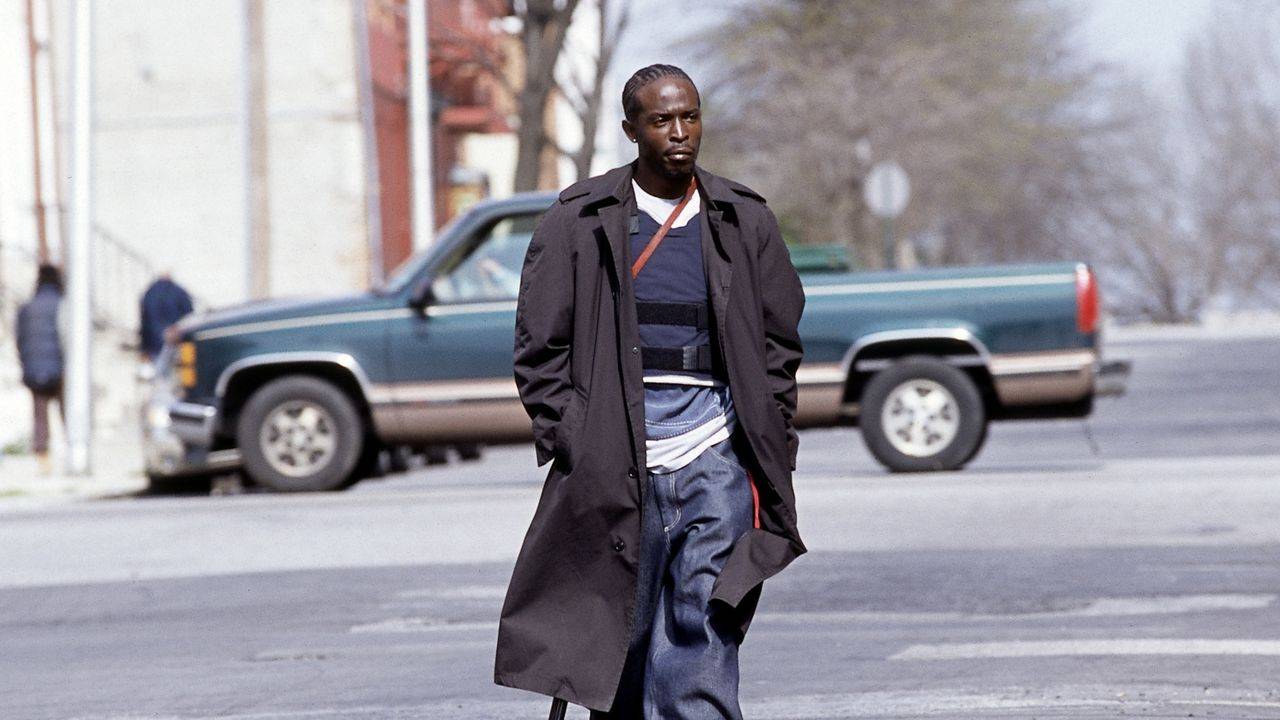
But this elite cast is not engaging in procedural Law & Order cases. No, they’re eating together, sleeping together, getting drunk together, going to ball games together; reminiscing, commiserating, bending the rules together; making secret alliances and back-room deals to see their version of justice made reality, and often failing. They’re sloppily making ends meet even if that means cramming down a bag of chips and a juice box and then going to sell drugs instead of going to school because their parents are addicts and they need to raise their siblings themselves. They’re cutting funding to the police department even though dozens of decomposing murder victims were found in vacant tenements because if money was pulled from the schools a reelection wouldn’t be in the cards. They’re following their instincts and intuition not only to make a living but to imprint their ideals on the place they live, even as economic inequalities, institutional prerogatives, and pervasive drug use confound those efforts at every turn. And each of these characters has their unique little tics and jargon and side stories, like how McNulty’s supervisor (Delaney Williams) is always munching on a snack and thumbing through a porn mag in his office, or the way Bubbles relates to his persistent sponsor (Steve Earle), or the incredibly close working relationship between McNulty and Bunk Moreland (Wendell Pierce) that allows them to recreate a crime scene by moving around the room and uttering variations on the English language’s most versatile vulgarity.
In this way, The Wire is able to survey the urban society of Baltimore from top to bottom, creating countless multi-dimensional, fully-human characters who evoke pathos and sympathy, but also, at times, anger and disgust. We live in a complex world without easy distinctions between good and evil, and few shows capture the reality of that better than this incredible series. The hyperbolic praise it routinely receives is entirely justified. The Wire is a medium-defining series—entertaining, yes, but also literate, radical, socially conscious, and full of unforgettable personas.