“You don’t wanna get mixed up with a guy like me.”
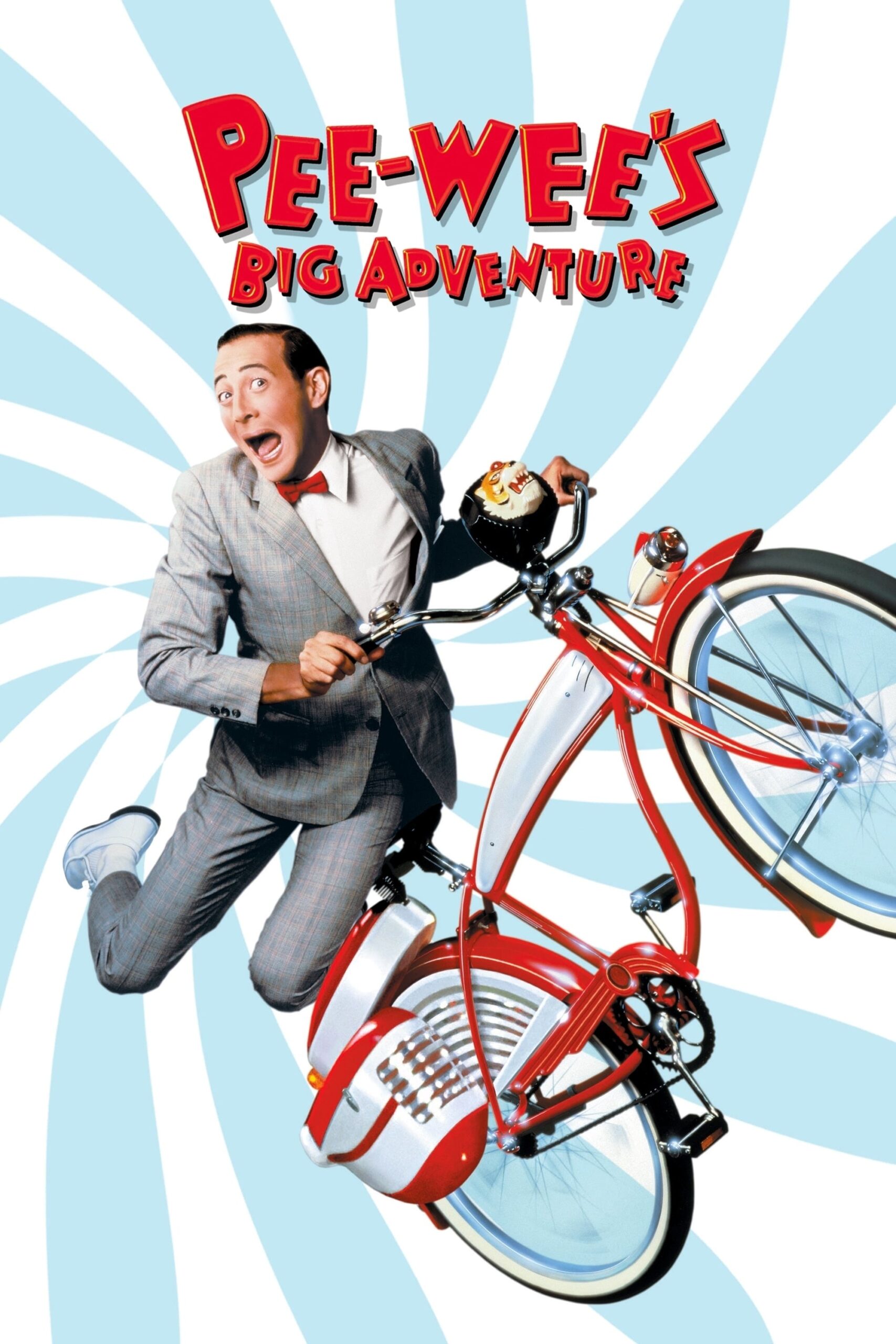
Nowadays we look back at Pee-Wee’s Big Adventure as the beginning of Tim Burton’s feature filmmaking career. He had been involved in the film industry for a number of years leading up to the project, but his whacky style hadn’t yet been established (worth mentioning are two shorter projects he made while working at Disney, Vincent and Frankenweenie).
Only slightly less obscure was the career of Paul Reubens, a stand-up comic who had anchored a successful midnight stage show in Los Angeles by appearing as the childlike Pee-Wee Herman, a one-note character that recalls the puerile humor Andy Kaufman was engaging in toward the end of his life. Reubens had achieved recognition and cult status for his portrayal of Pee-Wee, but how famous can one get doing avant-garde theater?
So, neither Burton nor Reubens had reputations that would suggest they could make money with an utterly weird feature film, which makes it something of a miracle that Warner Bros. not only greenlit the project on the merits of Reubens’ stage work, but that they also allowed the writer-actor to handpick the young and unproven Burton as his director.
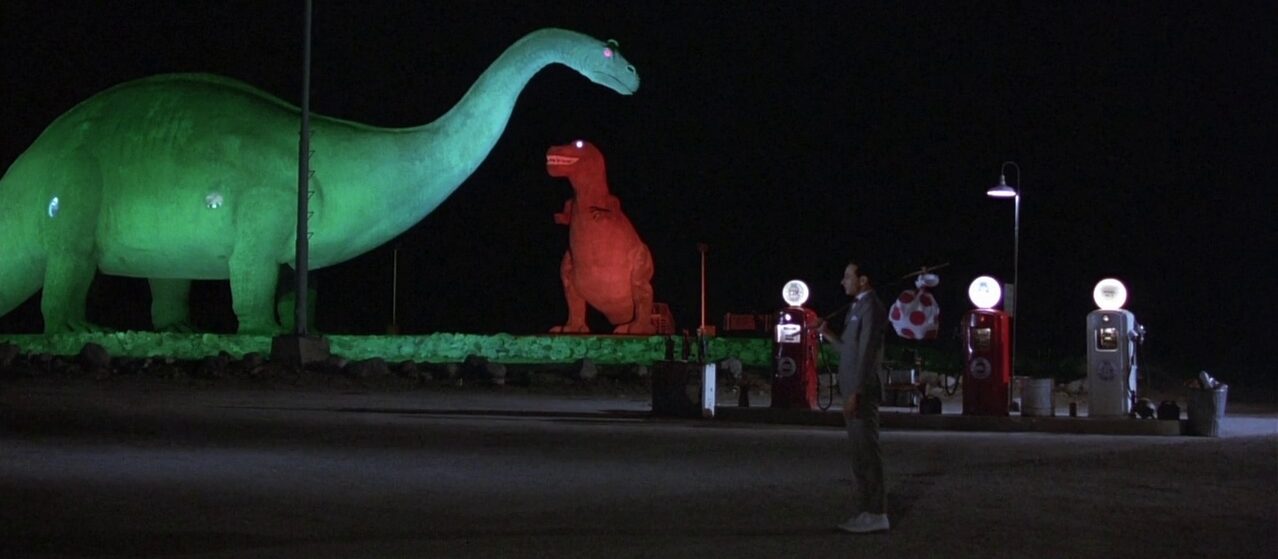
Adopting the juvenile, half-amusing, half-irritating persona that would define his public life for decades, Reubens finds himself riffing through a freaky kitsch fairytale land that’s not exactly what we’d later come to know as Burtonesque—even though Burton was, as a former animator, an inspired choice to bring this live-action cartoon character to the big screen. The character and entire scenario quickly reveal themselves to be entirely disconnected from our reality. A stolen bicycle leads to a road trip that sees Pee-Wee traveling to the Alamo, hitchhiking with fugitives and ghosts of truck drivers, participating in a rodeo, subduing a rowdy biker gang with a platform dance, and breaking into Warner Bros. studios, with everything finally culminating in a movie being made about his life starring James Brolin.
It makes little sense but it appears to follow its own skewed logic faithfully enough that it remains coherent, even if its skittery rhythm and embrace of wholehearted childishness precludes the story from ever building up to anything significant (the character does seem designed to work better in short bursts). Looking past Burton’s snappy direction and Reubens’ flamboyant mania, the film’s secret weapon is none other than Danny Elfman, whose warped score precisely matches the film’s candy-colored aesthetic and zany mise en scène. Just watch the “Mr. Breakfast” sequence, which involves a Rube Goldberg machine to rival the one in Chitty Chitty Bang Bang, and tell me it’s not delightful in the way it encapsulates the talents and sensibilities of all three of its primary contributors. I don’t know that I’d call this brilliant—but perverse, original, and liberating, with lots of personality.