“I thought I was alone in this fight.”
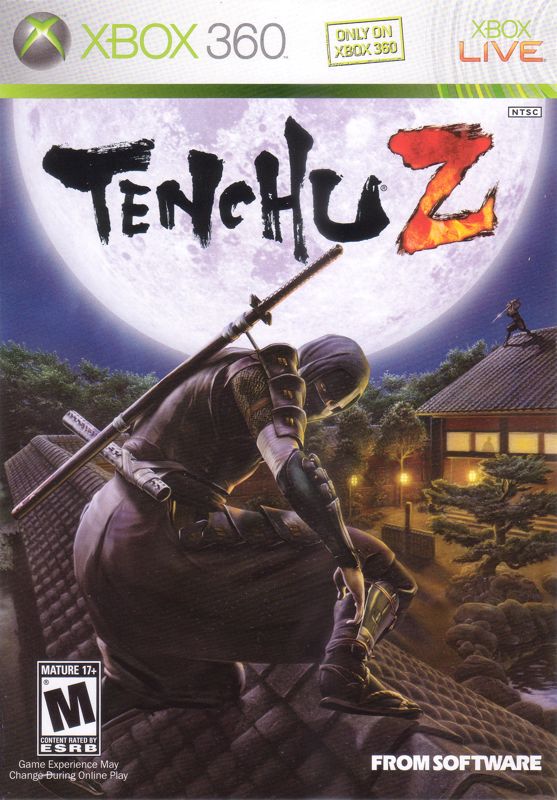
I must have played a different version of Tenchu Z than the one that was given to critics twenty years ago.
Well, hmm, you know, actually, if you’ll let me be a bit cynical and curmudgeonly for a moment—I actually did hate the game for the first hour or so I played it. Had I stopped then, I would have agreed with the naysayers. A Tenchu noob, I basically flunked the tutorial, and when I embarked on the first few assassination missions on the easiest difficulty, I was spotted by guards countless times. It wasn’t until I was almost a third of the way through the game that it started to come together for me. That’s when the unintuitive controls started to feel natural (or at least didn’t require much conscious thought) and the gradual increase in difficulty forced me to become a smoother operator.
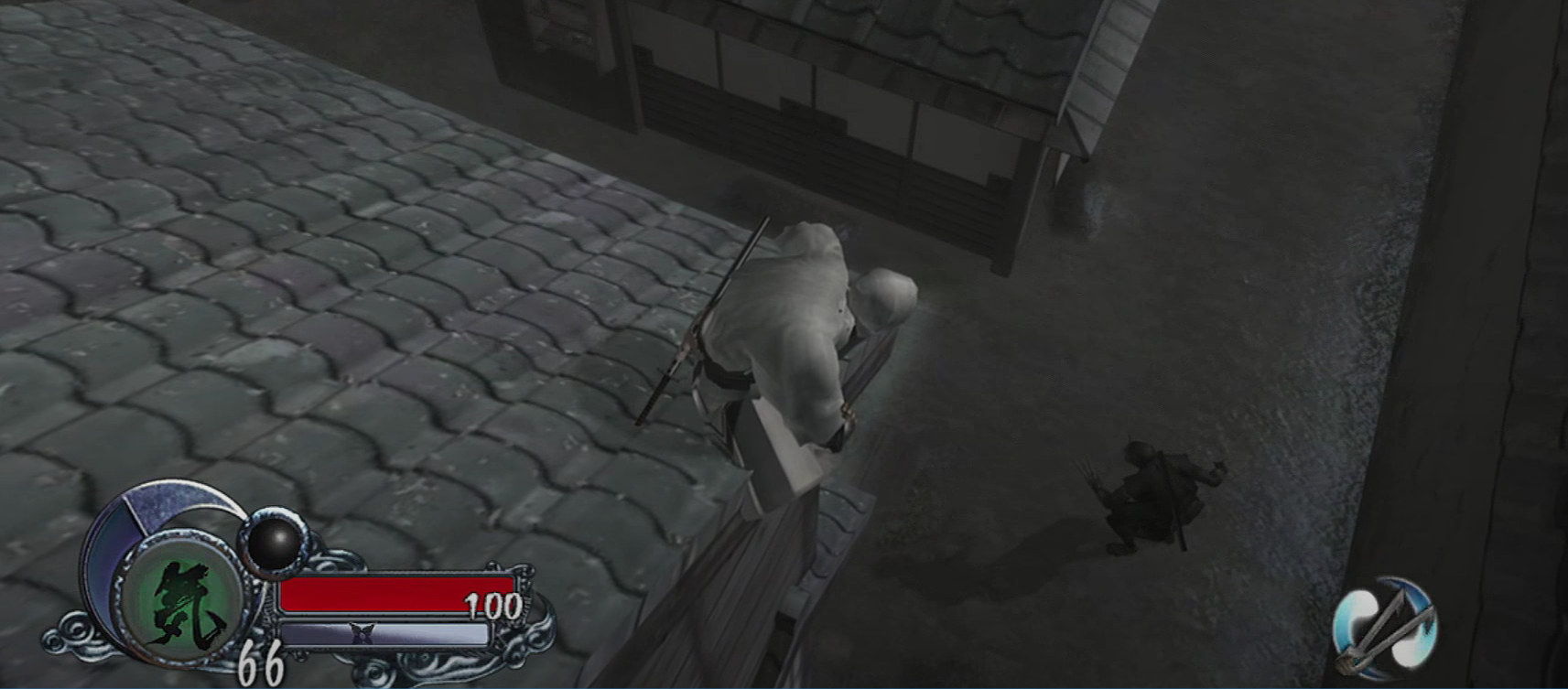
Initially, once I kind of got the hang of things, I was able to clear levels simply by rolling up behind the (admittedly quite passive if not inept) sentinels in complete silence, and ramming my sword through their backs. But eventually I was somersaulting through the air and slicing my enemies with a downward swipe; I was grappling my way onto rooftops and dive bombing unsuspecting foes; I was hiding dead bodies; I was crawling under floorboards and crouching in shadows; I was tossing shurikens and smoke bombs and grenades; I was shooting poisoned darts out of a blowgun; I was performing inverted stealth assassinations while clinging to ceilings.
The only thing that doesn’t work well is the face-up combat, but you shouldn’t be doing that anyway because you’re a sneaky ninja. Other minor complaints include the fact that you have to confirm you want to start a mission like five times before it actually starts loading the dang thing, and maybe a few other sundry complaints like having to re-equip items if you fail a mission or that killing only your target doesn’t give you a full Ninja 5 rank.
While most of the levels don’t require much beyond graceful movement and a stealthy blade, I found the simple dynamic to be quite thrilling and intense despite its repetitiveness. It’s like the dog tag hunting in Metal Gear Solid 2 (2001) except without the cheap mini-map and with more dynamic movement (and you get to slay your enemies and watch their blood geyser reflect the moonlight). It works best in small bursts, like an arcade title. It’s also a nice counterpoint—or antidote if you will—to the bloated, realistic open worlds that were just coming into vogue around the time of its release. I’m trying to escape reality when I play a videogame, hello! I don’t actually want the real-life pressure of trying to sneak into a castle under the noses of real-life swordsmen to assassinate a real-life criminal.
The stages, many of which are smartly reused from different angles, tend to be laid out in abstract ways that maximize the gameplay rather than with any concern toward realism. Traps are strewn about, buildings are situated where the game needs them to be, guards patrol random locations and forget about their slain partner’s corpse after a few minutes of alarm, dogs and bears roam around with their hackles raised—who cares if this is not exactly what 17th century Japan was like. Certainly not me. Neither is the game’s story trying to be anything more than a flimsy frame of reference for your adventures as a ninja.
And that’s all fine because in this way Tenchu Z aligns itself with classic videogames of yore more than contemporary games like Assassin’s Creed (2007) or what have you. It’s designed to be fun and it is fun, and if it were changed to be more realistic it would cease to be so. So if I’m being cynical, I’d suggest that this may be a case where the critics only played the first couple hours of a game and extrapolated their experience—which often doesn’t matter but here resulted in the ravaging of a quality game. Is this as good as Hitman: Blood Money (2006) or Splinter Cell: Double Agent (2006)? It’s been eons since I played either of those, but probably not. However, it’s closer to those games than it is to its reputation.