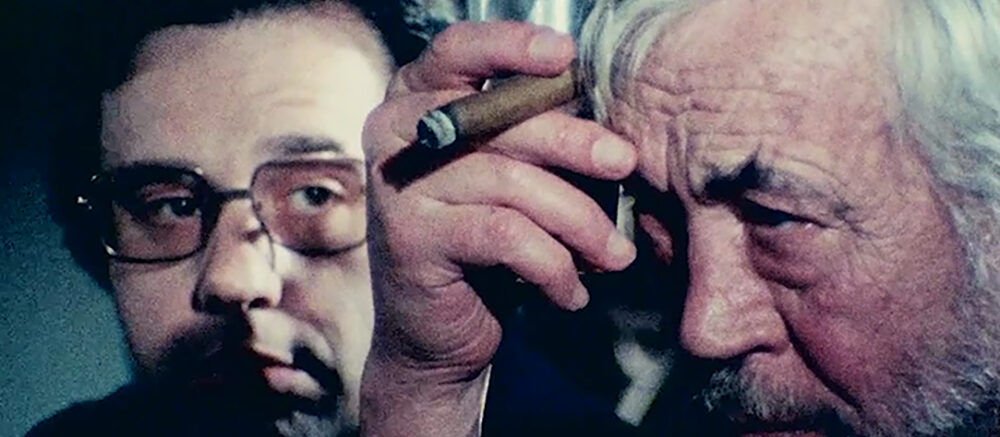
“Is the camera eye a reflection of reality or is reality a reflection of the camera eye? Or is the camera merely a phallus?”
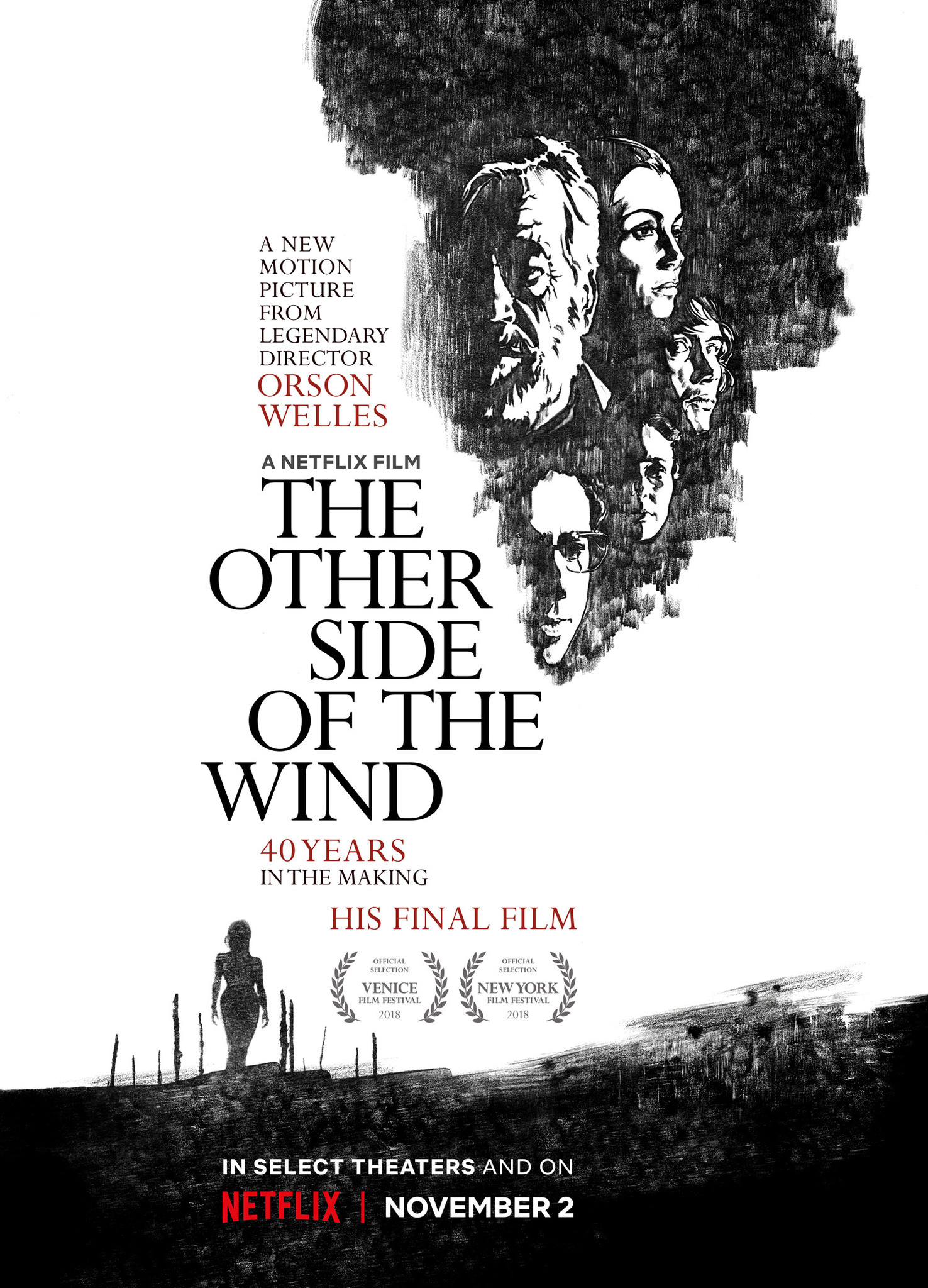
I can think of nothing more ironic nor fitting than Orson Welles’ final film—left unfinished at the time of his death and finally completed by a handful of producers (including one of its stars, Peter Bogdanovich) and editors (primarily Bob Murawski) nearly half a century later—I can think of nothing more appropriate than for that film’s very subject to be an aging director struggling to finish his avant garde swan song.
Radically post-modern, metatextual, satirical, and edited with kamikaze abandon, The Other Side of the Wind stars John Huston as a grizzled, cantankerous, and elusive filmmaker who is trying to secure funding to finish off a racy experimental film he hopes will revive his career in the post Classic Hollywood world. When he tries to screen the rough draft of the film at his own 70th birthday party, however, he is waylaid by journalists, academics, and spies who question his manhood and sexuality based on their readings of his body of work.
What emerges from this wild hodgepodge—the bag of technical tricks, the mocking tone, the thematic contradictions, the stylistic dichotomies (monochrome/color, silence/conversation, experience/youth, classic/modern, loneliness/companionship, fact/fiction), the prurient film-within-a-film (starring Welles’ romantic partner and co-writer Oja Kodar)—is a sense that Welles was deeply insecure about his role in shaping the film culture and industry into what it is (or what it was, for it’s somewhat different now), namely a system that neglects vital artists like Welles himself and prefers his legend over his work. It’s a daunting curio to behold, falling into our laps after all these years, and can’t immediately be slotted into film history or even the Welles canon. There’s certainly a mystique that draws one to its many unwieldy contours and jagged edges, but searching for deeper meanings and comprehending its lasting value is a tall task; one that springs the very trap laid out by the film itself.