“After you’ve been in a war, you understand it never really ends.”
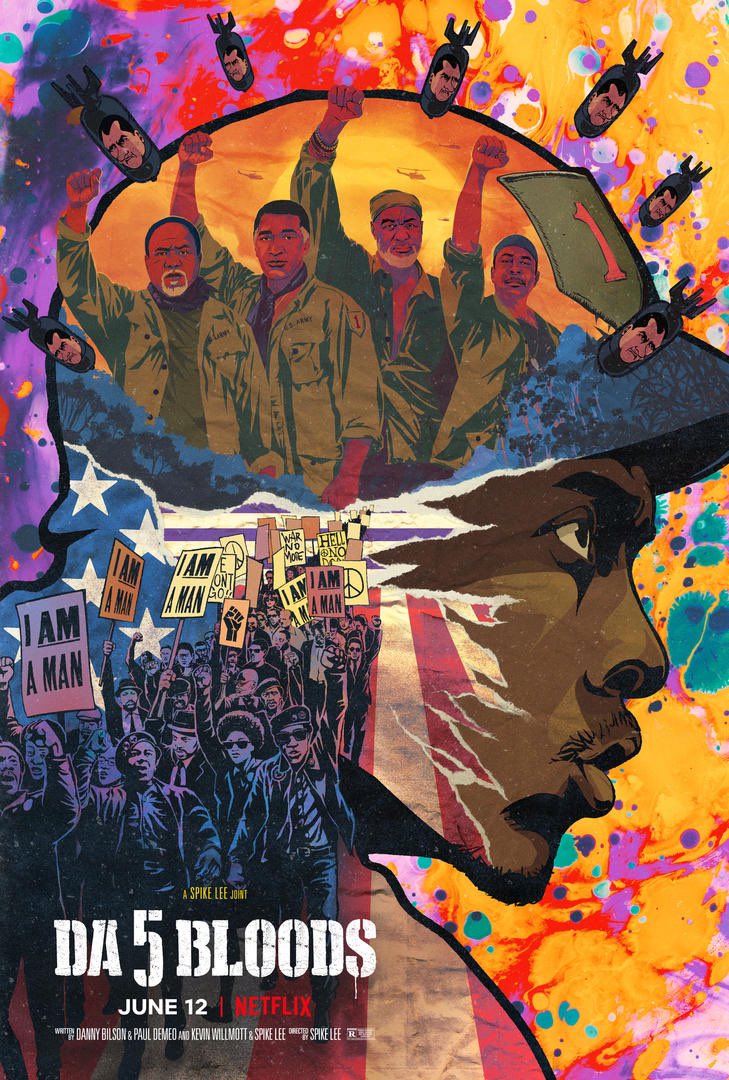
Spike Lee has always been preoccupied not only with correcting the perception of black American history but also specifically with rectifying the cinematic record of the same. In Da 5 Bloods, he attempts to do for the Vietnam War what he tried to do for WWII with Miracle at St. Anna (2008). That is, to amend the popular awareness set in place by films like Apocalypse Now (1979), The Deer Hunter (1978), Full Metal Jacket (1987), First Blood (1982), and Oliver Stone’s trio of war pictures (Platoon [1986], Born on the Fourth of July [1989], Heaven & Earth [1993])—although it ends up being less an homage/revision of classic war films than a reworking of John Huston’s The Treasure of the Sierra Madre (1948).
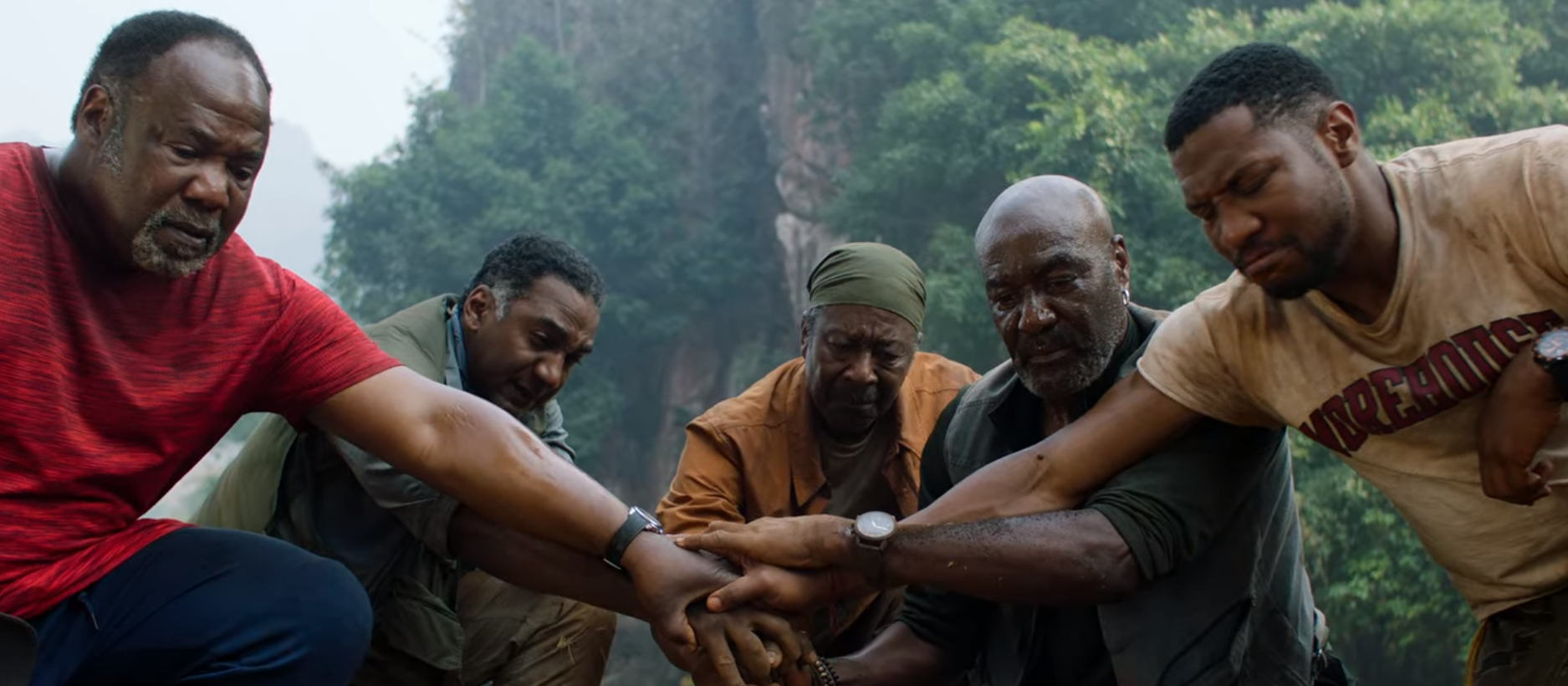
Framed by a stirring montage of 1960s news clips set to Marvin Gaye’s ‘Inner City Blues’ and a Martin Luther King speech, the film follows four veterans (Delroy Lindo, Clarke Peters, Norm Lewis, and Isaiah Whitlock Jr.) who return to Vietnam in search of the body of their KIA squad leader (Chadwick Boseman) and a horde of gold they’d stashed all those years ago. It has a lot on its mind politically, socially, and culturally (what Spike Lee Joint doesn’t?), but too often it is let down by its daft screenplay (prone to lectures, digressions, and unrewarding tonal shifts), as well as sloppy cinematography and editing, and low-grade pyrotechnics. Nevertheless, Lindo, given the only character with any real definition, turns in a solid performance, and Peters, Lewis, and Whitlock breathe enough life with their performances to usher us through all the pointless hangout scenes.
A mixed bag of highs and lows—at times plaintive and thoughtful, at others crude and revolting; purposeful and ambitious, but also unfocused and ambiguous.