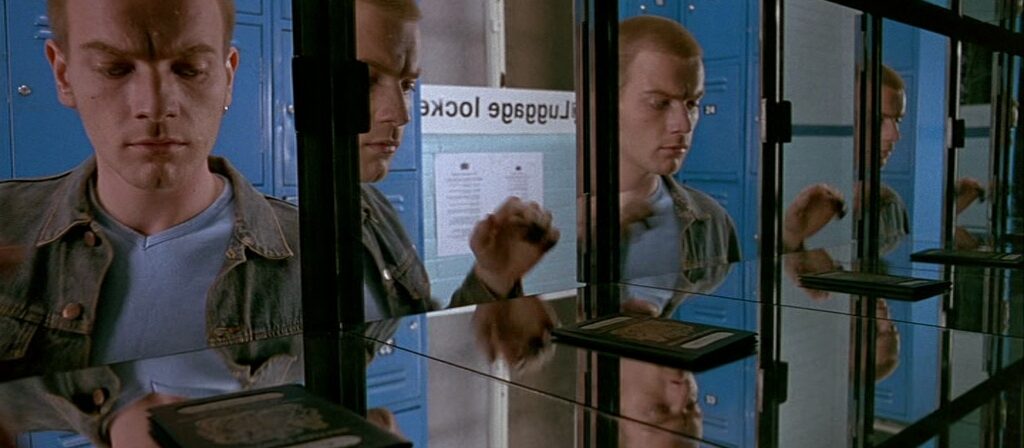

“Who needs reasons when you’ve got heroin?”
Danny Boyle’s Trainspotting is an enthusiastically amoral film, totally uninterested in providing its audience with the sense of illicit thrill that typically accompanies such portrayals of extreme behavior. It sails right past any sense of social etiquette, unafraid of embracing its repulsive subject matter on its own warped terms, immersing itself in an outsider subculture of wild caricatures hell-bent on the next score, entering a twisted realm of distorted principles and erratic sensation as it pings between euphoric highs and drastic lows alongside its gang of self-destructive outlaws (Ewan McGregor, Ewen Bremner, Jonny Lee Miller, Robert Carlyle, Kevin McKidd).
The film has no qualms with depicting addicts immensely enjoying their binges—“People think it’s all about misery and desperation and death and all that shit, which is not to be ignored,” says McGregor’s character Renton. “But what they forget is the pleasure of it. Otherwise we wouldn’t do it.” Or better yet: “Take the best orgasm you’ve ever had… multiply it by a thousand, and you’re still nowhere near it.”—while at the same time underlining the devastating nature of addiction. Propelled forward by energetic camerawork, fourth-wall breaks, frantic voiceovers, flamboyant acting and editing, nihilistic humor, literate dialogue, and a delectably integrated, wall-to-wall soundtrack that includes Iggy Pop, Lou Reed, Pulp, and Damon Albarn, and punctuated by disturbing, iconic scenes (a dead baby hallucinated onto the ceiling, “the worst toilet in Scotland”), Trainspotting is as rhythmically entertaining as it is edgy and repulsive, but it shouldn’t be taken as some radically authentic depiction of the junkie lifestyle.