
“Let’s kick the tires and light the fires.”
Found footage films are a mixed bag. The primary issue that plagues most of these efforts is that having the subjects’ record their every move is a gigantic contrivance that undermines the verisimilitude achieved by the shooting style. Not so in Ben Coccio’s Zero Day, a dreadfully potent film that never breaks character and feels more like a documentary with each passing moment.
Depicting the build-up to a Columbine-like high school shooting, Zero Day is conveyed through the video diaries of two alienated youngsters as they prepare to ruthlessly slaughter their peers and take their own lives. In contrast to Michael Moore’s grandstanding Bowling for Columbine (2002)—a narcissistic documentary starring the directwor that slings accusations left and right (well, mostly right) as it seeks to assign guilt to someone other than the murderers—Zero Day focuses on the seemingly normal lives of two wrongheaded teenagers who, for a variety of faulty reasons, conclude that they’d been divinely commissioned to send the world a grisly message.
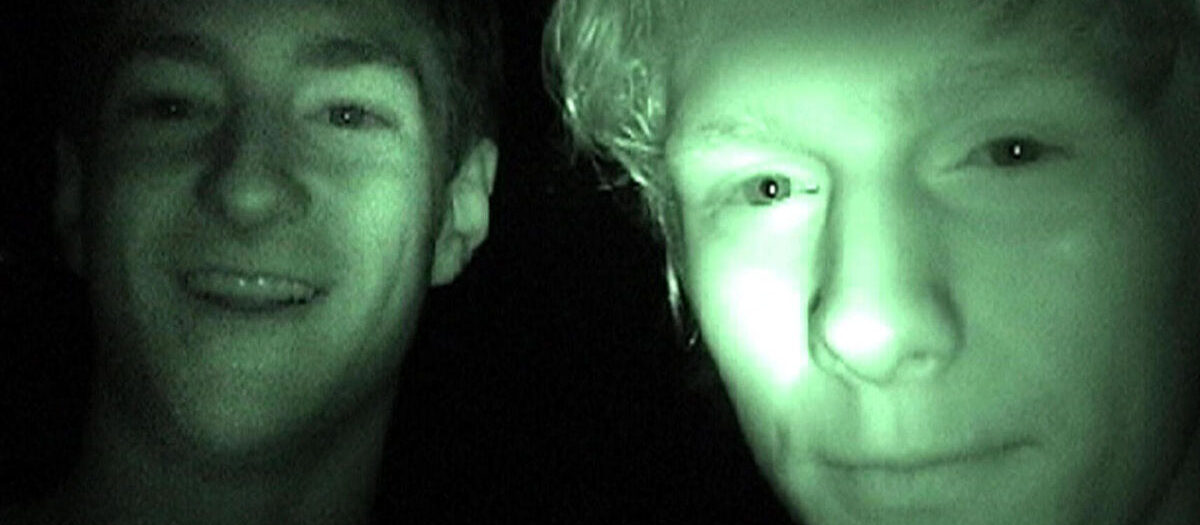
As intelligent and talented as they are sardonic and antisocial, Andre (Andre Keuck) and Cal (Calvin Robertson) bond over their shared hatred of their school, their teachers, and their classmates. We become privy to their insidious ruminations when Andre’s father presents his son with a video camera for his eighteenth birthday, a benign gift that seems to accelerate and intensify the boys’ plans. At first, they’re just mischievous. They launch fireworks toward other cabins at the family lakehouse. They approach the home of a jock at midnight and gleefully pelt its façade with rotten eggs.
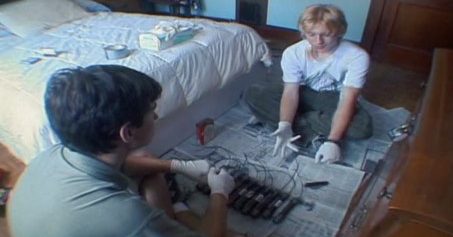
But soon they begin referring to themselves as the Army of Two, asking a cousin to take them target shooting, sneaking into Andre’s father’s closet to familiarize themselves with his arsenal of hunting weapons, and speaking with conviction about their duty to mankind. They diligently explain their tactics to the camera: how to fabricate a short grip gunstock, why you should buy the components for your pipe bombs at different stores, how to make pipe bombs without leaving evidence on the bedroom floor. Most alarming at this juncture is when they explain that they’ve experimented with duct taping shrapnel to the outside of the bombs; they don’t plan to test them until Zero Day, so if the viewer wants to know how they work they’ll have to ask a survivor. Shocking revelations start to come at faster clip, such as Cal’s reading of a violent poem at an open mic night, or his decision to abandon his prom date to film a “suicide note” with Andre, or the midnight bonfire into which the pair toss all their childhood memorabilia.
Throughout this process, which is documented on video and archived in a bank strongbox, the boys remain friendly with their families and acquaintances, attending New Year’s Eve parties, going to prom, going on dates, working at a pizza shop, etc. Though less complicated and artful than Gus Van Sant’s similarly inspired Elephant (2003), Coccio’s film achieves a startling believability through the use of a nonprofessional cast. Though likely dictated by a limited budget, Coccio’s choice to cast high school drama students and to use the actors’ own parents and houses, is a brilliant decision in hindsight. And these two young kids are both skilled at playing psychos with straight faces. Indeed, the film is so effective because for large swaths of it, these two are just fellow outcasts who have discovered a fun pastime in making video diaries. They’re so unsentimental in their approach, never breaking into impassioned hysterics as they progress toward a violent fate, that the few moments when their discussions expose their true aims are absolutely bone-chilling.
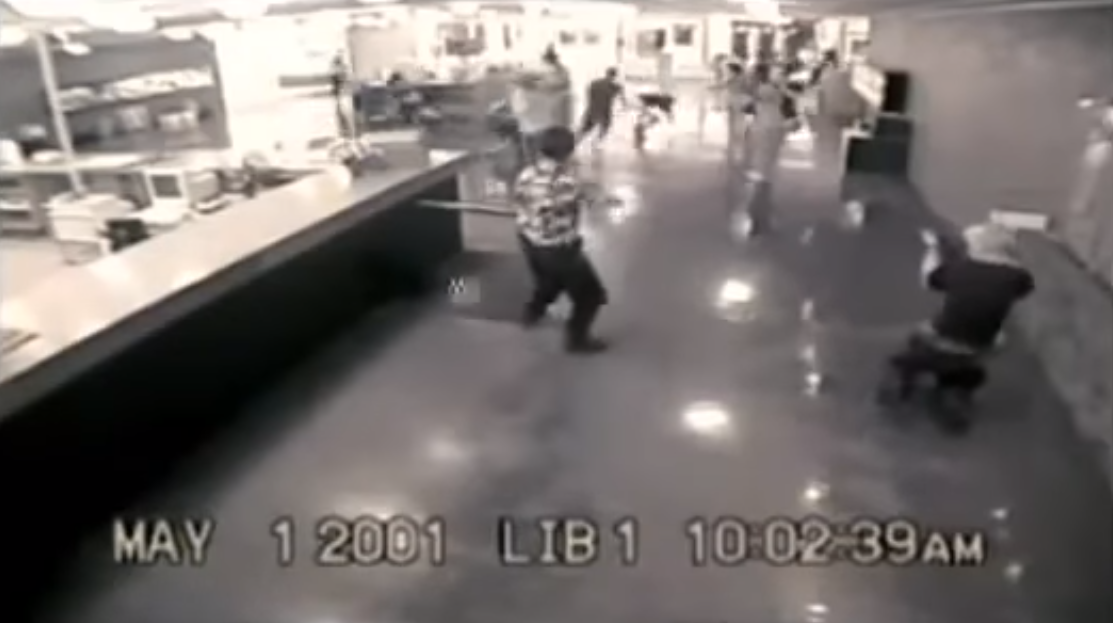
They’re so straightforward in their approach that no one suspects them, until Zero Day arrives and the boys march into their high school and begin shooting—a harrowing sequence presented via silent CCTV footage, the only sound coming from the futile pleading of an emergency call center operator when the caller is gunned down after dialing 911. While the security footage works, it does break from the handheld style of the preceding chapters and one has to wonder if the final camcorder shot of the pair walking toward the school, with the camera still rolling on the dashboard of Andre’s car, might not have been an even more effective endpoint.
Perhaps the most unsettling element of Zero Day is Coccio’s decision to leave the motives ambiguous, to suggest that the kids themselves don’t fully understand what drives them to commit such heinous crimes. On the surface, these are two normal guys struggling to understand the world during their teenage years. Weren’t we all that way, though? Maybe it’s the fact that, as Moore’s documentary makes clear, it is super easy to legally procure a gun in America. (But as Andre pointedly explains, there’s no point in purchasing a gun that way if you intend to commit a crime with it. Just steal one.) Maybe it’s something to do with the state of public education, or with the lack of parental investment in their children’s inner lives. Zero Day doesn’t answer any questions, but it makes them harder to ignore.